Downtown Las Vegas · Neighborhood Guide
Most of Las Vegas asks you to drive. The Arts District is the rare corner that asks you to walk. It's a low, sun-bleached, mural-covered stretch of Main Street just north of the Strip, where galleries, coffee counters, vintage shops, and bars sit shoulder to shoulder instead of behind a parking lot.
Officially it’s the 18b Arts District (the name comes from the original eighteen-block arts zone), and it’s the closest thing the city has to a walk-everywhere neighborhood. If you’ve read the Summerlin or Henderson guides, this is the opposite instinct: not a master-plan someone drew from the top down, but an old warehouse-and-antique district that grew a personality of its own.
The honest overview
The heart of it runs along Main Street, roughly between Charleston Boulevard and Colorado Avenue, at the downtown edge of the city and just north of the Strip corridor. It started as the city’s antique row and a scatter of warehouses, and over the last decade it filled in with galleries, coffee roasters, breweries, tattoo shops, record stores, and restaurants, most of them independent, most of them local.
It’s compact. The walkable core is a handful of blocks, not a sprawling district, and that’s the point. You can park once and spend an afternoon on foot, which is a genuinely unusual sentence to write about Las Vegas. What it is not is a polished, finished neighborhood. It’s a real one, mid-transformation, with new money and rough edges on the same block.
What it actually feels like
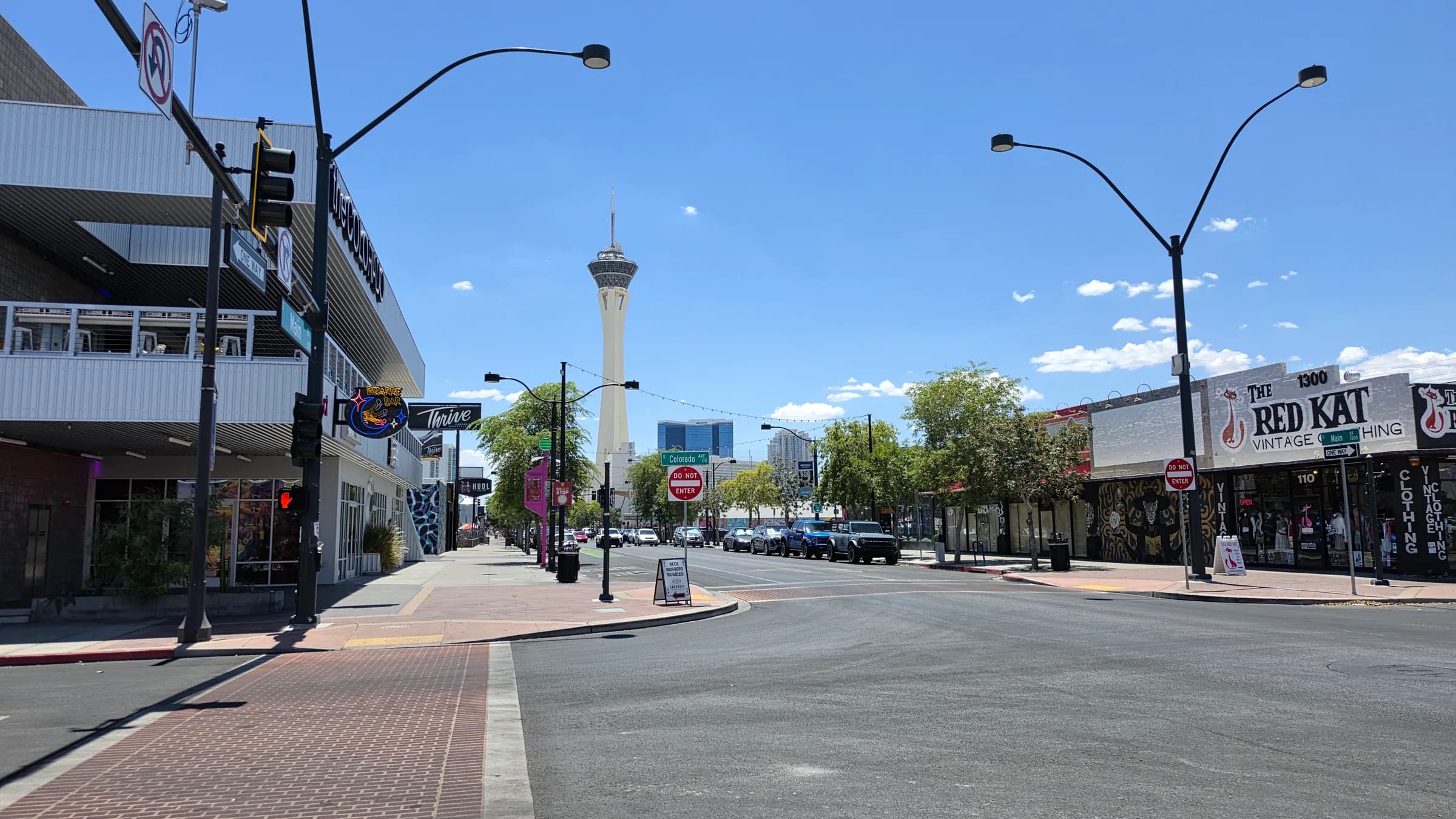
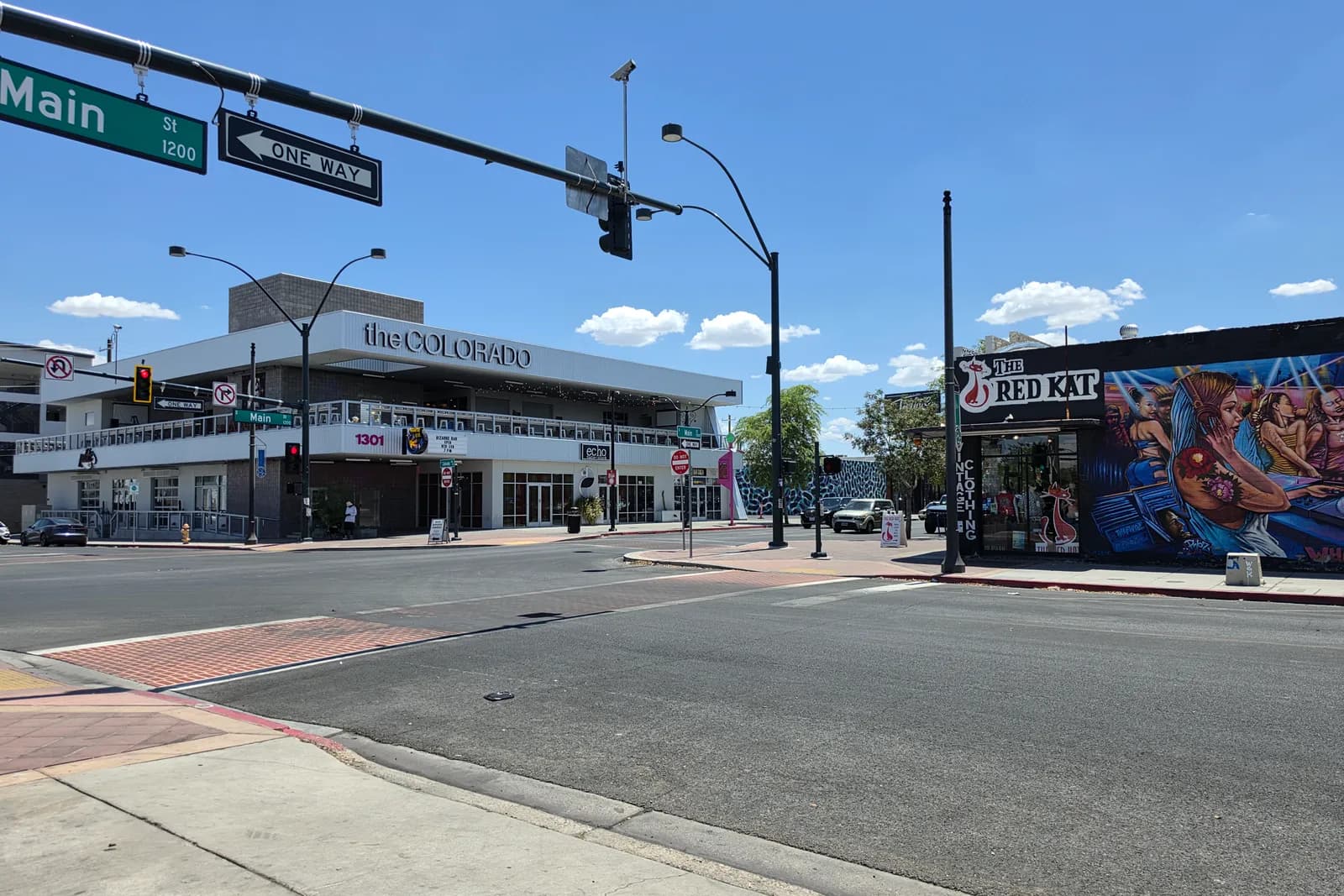
Walk it in daylight and the first thing you notice is how low it is. One- and two-story buildings, wide desert sky, and murals on nearly every wall that has room for one. There’s good mid-century bones here, like the Colorado building, mixed with warehouses that have been repainted and repurposed rather than torn down. It reads creative and lived-in, not manicured.
The rhythm is split. By day it’s quiet and a little sleepy: coffee, browsing, the occasional gallery. In the evening, and especially on weekends, the bars and restaurants wake it up. Once a month, on First Friday, the whole district turns into a street festival. If you live here, you live with both versions of the block.
Genuinely walkable, by Vegas standards
I want to be precise, because “walkable” gets thrown around. The Arts District is a walkable pocket inside a car city, not a walkable city. Within the core, you really can leave the car and move between coffee, lunch, a record shop, and a bar on foot. That’s rare enough here to be the whole selling point.
But be honest with yourself about the edges. Push a few blocks out and the sidewalks get gappy, the streets get wide and fast, and the shade disappears. For daily errands (a full grocery run, big-box anything) you’ll still likely drive. It’s walk-for-your-Saturday, not walk-for-everything.
Coffee, food, bars, vintage, and galleries
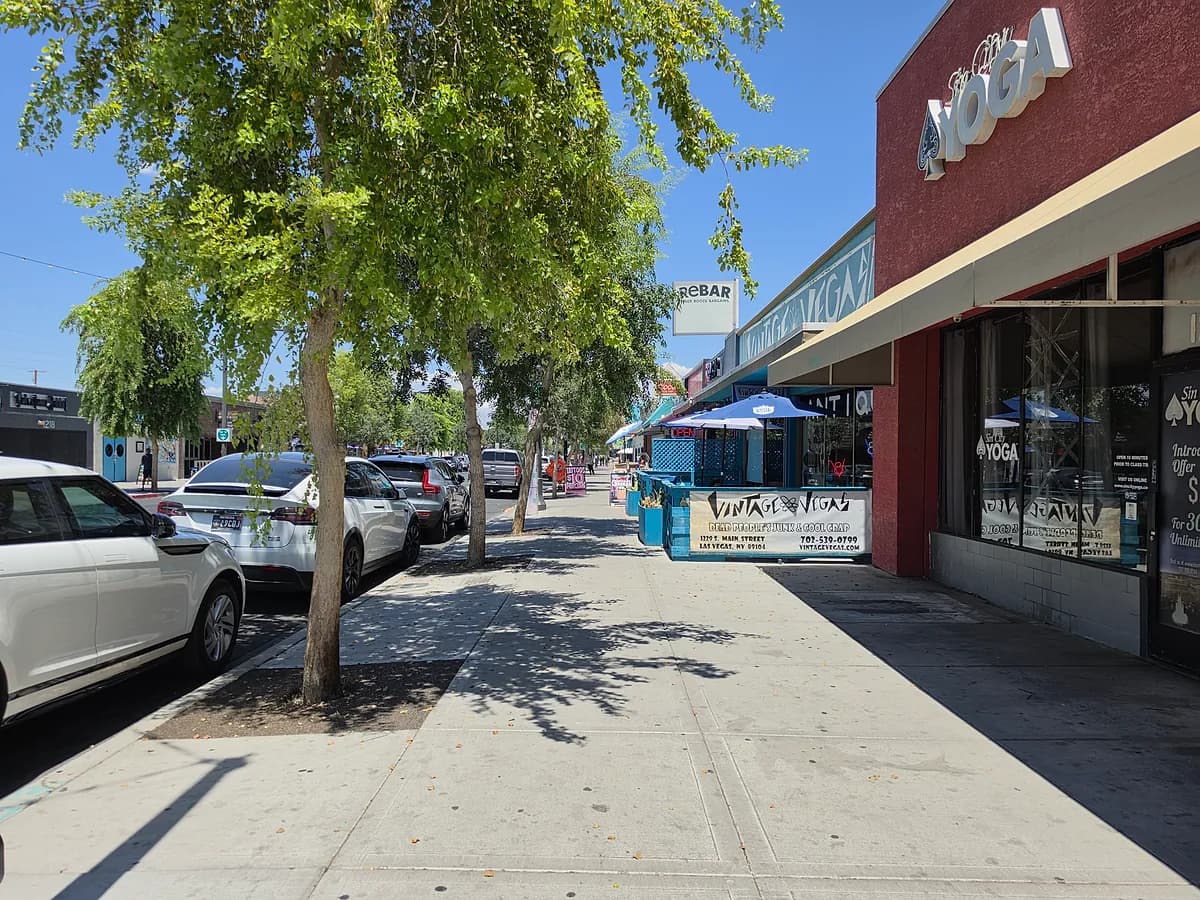
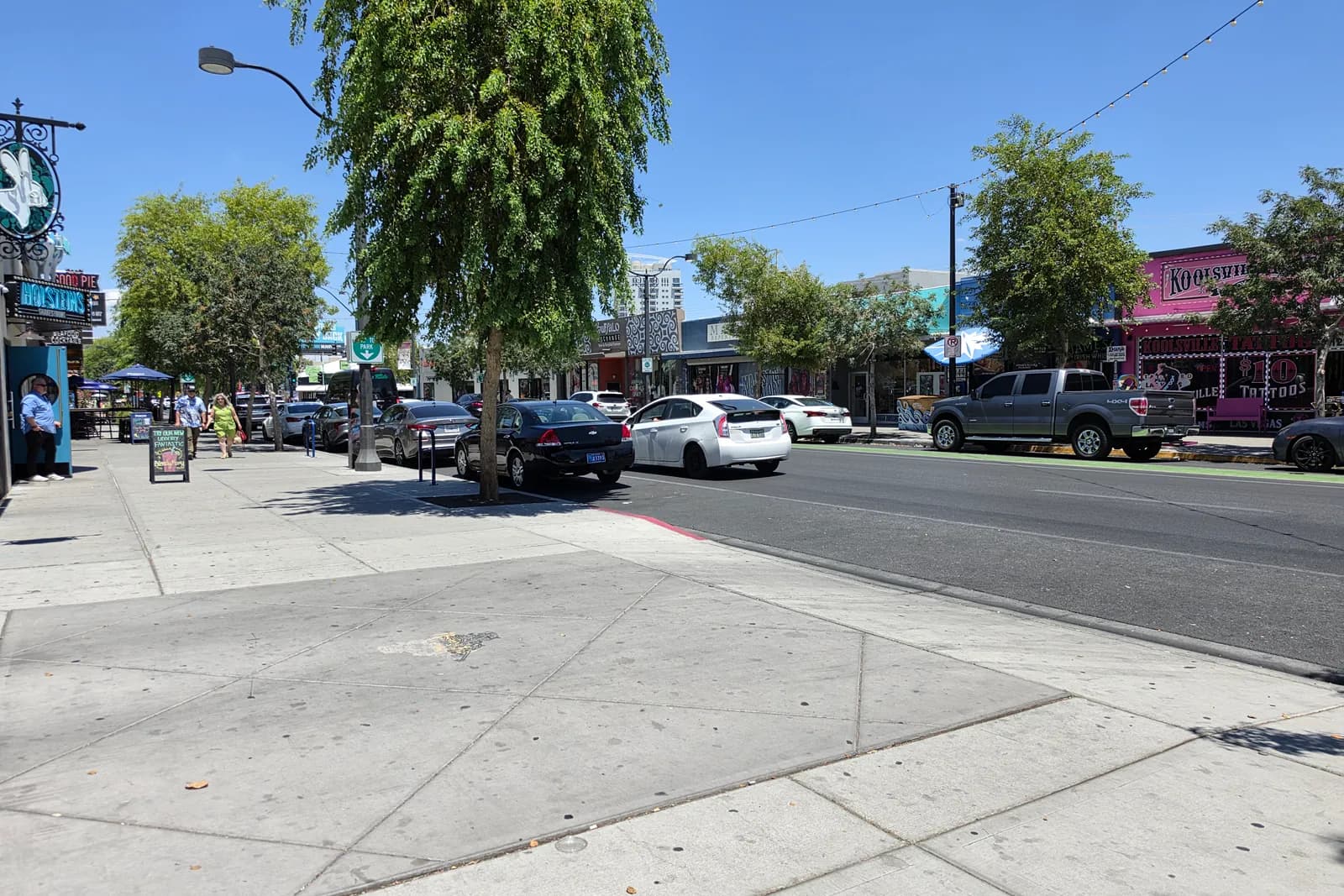
This is the district’s real draw, and it’s dense: specialty coffee, breweries and cocktail bars, restaurants that range from casual to serious, vintage-clothing and antique stores, tattoo shops, and working art galleries. The names turn over, which is the nature of an independent district, but the character holds. You’ll find longtime fixtures like The Red Kat for vintage and Koolsville Tattoo alongside newer bars filling in the old buildings.
The one date worth knowing is First Friday, a monthly arts event that’s run in some form since 2002 and takes over the district the first Friday of each month with vendors, art, music, and food. Because the exact footprint and hours shift season to season, check the 18b Arts District’s official calendar before you plan around it rather than trusting an old blog.
What's being built: the housing question
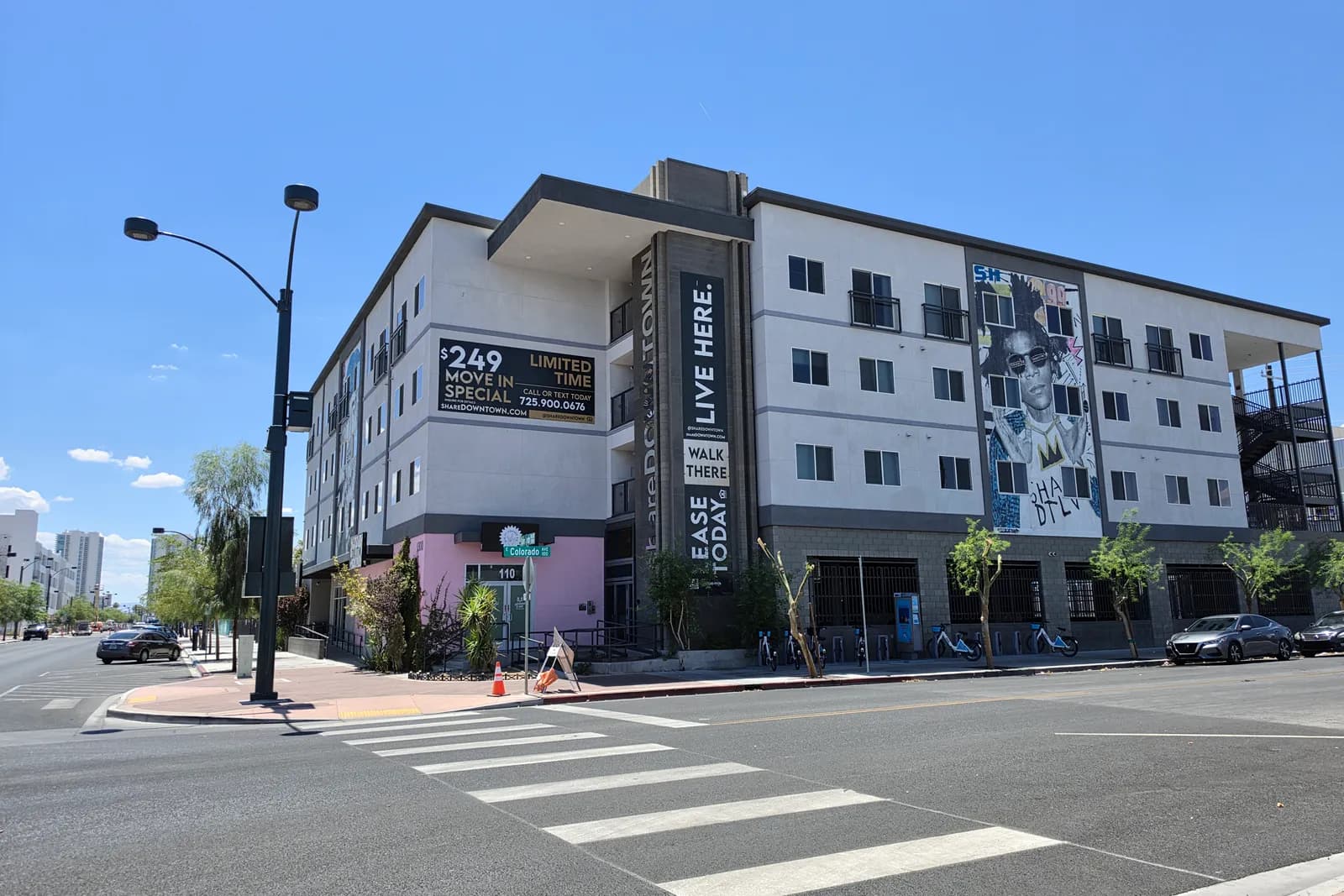
Here’s where you have to reset your expectations. The Arts District is not a single-family-home neighborhood. Historically it was commercial and industrial, so what you’ll actually find is a mix: older buildings and lofts, condos, and, increasingly, new apartment builds going up on the edges, leaning into the “live here, walk there” pitch. It’s more a renter’s district than an owner’s, for now.
For-sale inventory exists but it’s thin and varied, and it moves. That’s exactly why I won’t hand you a price or a rent figure on this page. Those numbers are too situational to quote honestly from a brochure. When you’re ready to look seriously, that’s a conversation to have against real, current listings, the kind you can pull up on the search page.
Who it's for
This one has a real personality, which means it fits some people perfectly and others not at all. It’s for the person who wants to walk to coffee and a bar, who’d trade square footage and a yard for character and a front-row seat to the most creative part of the city. It suits renters, singles and couples, people in the arts and hospitality worlds, and anyone who’s bored by the idea of a matching-beige master-plan.
If “I want to feel like I live somewhere, not just park somewhere” sounds like you, this is one of the only places in Las Vegas that delivers it.
The whole valley is built around the car. The Arts District is the one place that dares you to leave it parked.
Who it's probably not for
I’d be doing you no favors to pretend it fits everyone. If your top priorities are highly rated schools, a yard, a two-car garage, and quiet cul-de-sac evenings, this isn’t your neighborhood, and that’s no knock on you. It’s just a different life. The suburbs do that far better, which is the entire reason the Henderson and Summerlin guides exist.
It’s also not for the light sleeper who wants silence on a weekend night, or for anyone expecting suburban convenience (big grocery stores, easy parking, everything ten minutes away) within walking distance. The trade for character is a little friction.
Parking, heat, noise, and nightlife hours
The practical stuff, straight. Parking is mostly street and small lots; it’s easy on a quiet weekday and genuinely tight on First Friday and busy weekend nights, so plan for it. The heat is real: these photos were taken at midday in July, and you can feel it in how empty the sidewalks are. Shade is thin between the core blocks, and summer afternoons here are a commitment.
Noise cuts both ways. The nightlife that makes the district fun also means the bars run late on weekends, so proximity to the action is a feature or a bug depending on which side of your window it’s on. And the daily rhythm is genuinely nocturnal-leaning, with sleepy mornings and lively nights. If you’re an early-to-bed person, live a block or two off the loudest stretch.
How it's different from the Strip and Fremont Street
People new to the city lump downtown together, so it’s worth being clear. The Strip is the resort corridor: casinos, tourists, and hotels, a place you visit more than live in. Fremont Street and Fremont East, a little to the north, are the older downtown tourist and bar zone under the light canopy. The Arts District is neither. There are no casinos in it; it’s independent businesses, galleries, and locals, and it reads far more like a real neighborhood than an attraction.
That’s the honest appeal. You get a walkable, creative slice of the city with the Strip close enough to see on the horizon (visible in nearly every photo on this page) without living inside the tourist machine. When you want to weigh that against the quieter, more conventional options, that’s exactly what I’m here for.