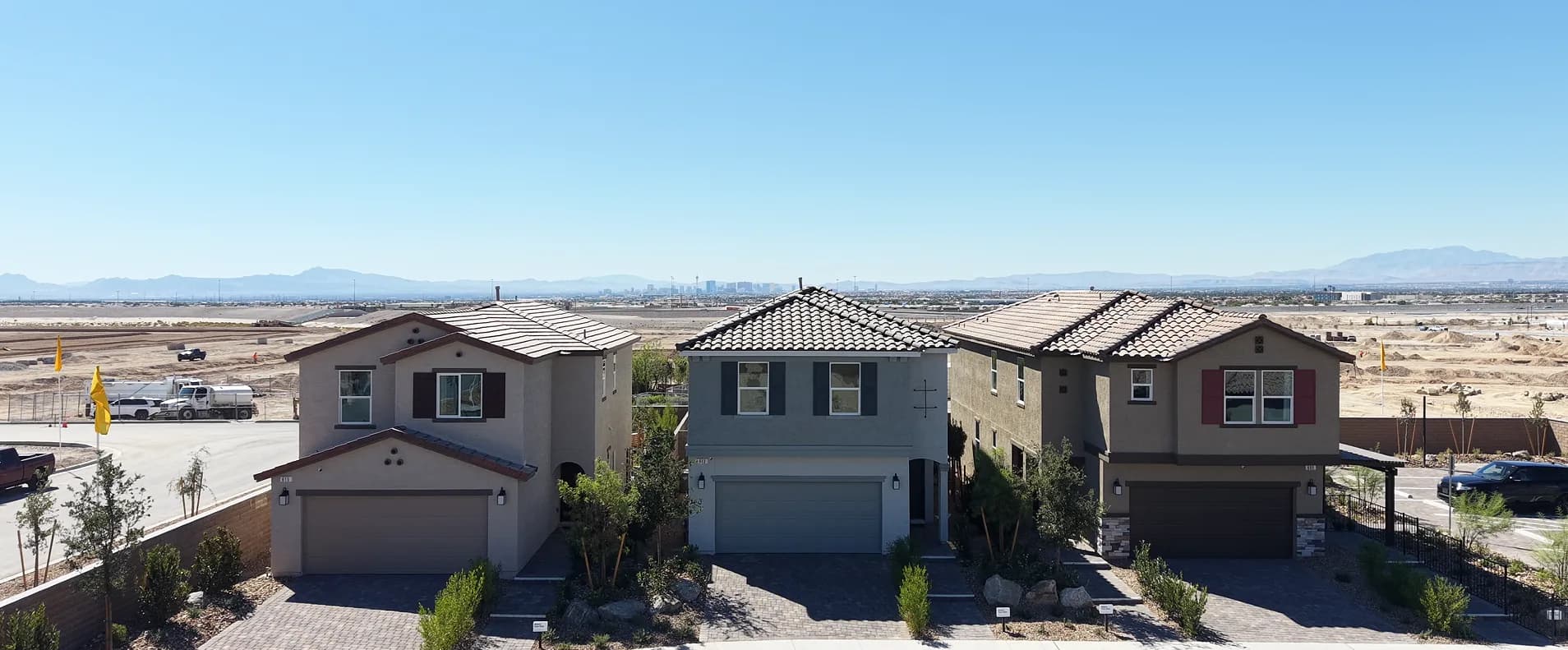
Buyer Guide
A model home is built to make you say yes. The sales office is run by the builder, the contract is the builder's contract, and the price on the sign is the start of the conversation. None of that is sinister. It just means new construction runs on different rules than a resale, and the buyers who do well are the ones who learn them before the first visit.
This guide is about how the process works. Whether new construction is right for you at all is a different question, and I cover it in New Build vs Resale.
The process, start to finish
Every builder runs this a little differently, so treat it as a map of the usual order, not a rulebook.
Step 1
Research the community before you visit
Read what the builder has published, then check the city or county for what is planned around it. Phases still under construction, nearby parcels and the pace of build-out matter more here than they do on a resale street.
Step 2
Walk in with representation
The sales office represents the builder. Many builders ask that a buyer's agent be introduced on the first visit, so ask the builder's policy before you go rather than after you have already walked in alone.
Step 3
Choose the homesite and plan
Plan, elevation and lot are separate decisions, and lot can change the price. Ask what is still available, not just what the sign says.
Step 4
Get the real price in writing
Base price, lot premium, structural options, design selections, and any incentive with its conditions, all on one sheet.
Step 5
Contract, design center and construction
Selections are typically made on the builder's schedule, and many choices cannot be changed once construction reaches a given stage. Ask for those cutoffs up front.
Step 6
Inspection and walkthrough
Hire your own certified inspector and attend the builder's walkthrough with a written list. More on this below.
Step 7
Closing and the first year
Know how warranty requests are submitted before you need one, and keep everything in writing.
Bring your own agent to the model home
The person at the sales office is a skilled professional who works for the builder. That is their job, and it is a fair one, but it means no one in the room is looking out for your side unless you bring someone. Because many builders ask that a buyer’s agent be registered on the first visit, the order matters: ask the builder’s policy, then go. If you walk in alone and sign in first, you may find you have already answered the question of who represents you.
Ask any agent how they are paid on a new-construction purchase and what you would be agreeing to. That is a normal question, and the answer should be clear before you start touring.
Incentives are not price cuts, and the lender string is part of the deal
A price cut lowers what you pay. An incentive changes the terms around what you pay: a rate buydown, closing-cost help, design-center credit. They are not interchangeable, and they do not always have the same value to you.
For the national backdrop, the NAHB/Wells Fargo Housing Market Index for September 2026 (released mid-September) found 66% of builders using sales incentives, up from 63% in August, and 38% cutting prices, up from 35%, at an average cut of 6%. The index itself fell three points to 32. That is a national builder survey, not a Las Vegas number, but it describes the environment: incentives and price cuts are both part of how new homes are being sold right now.
Incentives usually come with strings, most often the builder’s preferred lender. Ask what the incentive is worth in dollars, whether a buydown is temporary or permanent and what the payment becomes when it ends, and what happens to the incentive if you use your own lender. Then get one competing quote. I walk through the same logic, with the rate environment, in Is Las Vegas a Buyer’s Market?.
Lot premiums, upgrades and the design center
The advertised price is usually written against a base homesite and base finishes. The final number is built from layers:
- Lot premium. A corner, a view or a bigger yard can cost more than a standard lot. Ask the premium for the specific lot you want.
- Structural options. Extra bedrooms, a larger garage, covered patios. These are typically chosen early and are costly or impossible to add later.
- Design center selections. Flooring, counters, cabinets, fixtures. Ask what is included at base and the deadline for each choice.
- Everything after closing. Backyard, window coverings and appliances are often yours to supply. The full list is in the new build vs resale guide.
A fair habit: keep a single sheet with every line, and never let a conversation move forward on a monthly payment alone. Ask for the out-the-door number in writing.
Phases, and living next to a construction site
Large communities open in phases. Some of what you see on the plan map is not built, not priced and not scheduled. If you buy in an early phase, you may be living next to construction for a while. Ask which phases are open, which are announced and which are just lines on a map.
Two LVINIT pages show the range. At Sandstone at Tule Springs in North Las Vegas, KB Home has opened two sub-communities for sale (Landings from the high $300,000s, Reserves build-to-order from the mid $400,000s) while two more are described as coming soon, and homesite premiums can apply on top of base price. At Monument Hills, the land deal has closed and first homes are not expected until spring 2028. One you can tour. The other you can only watch.
Watch the walkthrough
A real new-construction community, on camera
My tour of Landings at Sandstone, covering the homes, lots, upgrades and the growth around the community.
HOA, SID and LID: check before you fall for the plan
Ownership costs in a new community are set by the parcel, not the builder’s brochure. Ask whether an HOA applies and what it covers. Ask whether the parcel sits in a Special Improvement District. Per Clark County’s Treasurer, a special assessment is a charge levied against properties within an SID, and special assessments are different from real property taxes and are billed separately. Ask for the actual figures for the actual lot, because none of them can be known without the parcel. Landings at Sandstone, for example, has no HOA; that is not true of every community, and I would not assume it anywhere else.
Property tax is its own question on a home with no tax history. The owner-occupied cap works through a claim, not automatically, and I explain it in the Nevada property tax guide.
Inspection, walkthrough and defects
Passing city inspections means the work met code at set stages. It is not an independent review on your behalf. Many buyers hire their own inspector during construction and again before closing. Nevada requires inspectors to be certified (NRS 645D.160), so ask to see the certificate. Then attend the builder’s walkthrough with a written list and get every item recorded.
If a defect shows up after closing, Nevada has a statutory notice and response process for constructional defect claims on a residence (NRS 40.600 through 40.695). It is a legal process, not a help desk, and the timing details are the kind you should confirm with an attorney. Read the builder’s warranty document before you sign, because terms vary by builder. This is a guide, not legal advice.
Where to research which areas are building
New construction is not spread evenly across the valley. Start with the area guides, then check the builder and the city or county for what is open and what is planned.
- North Las Vegas: our guide names Tule Springs and Sandstone as where new construction is happening on the city’s northern edge.
- Southwest Las Vegas and Henderson: both have a lot of new construction, structured differently, and the guides explain how.
- Summerlin: the master plan, where builders build neighborhoods on the parcels.
For scale, in July 2026 the median closing price for a new-construction single-family home in Southern Nevada was $581,930, per the figures in our July new-home sales report. If the down payment is the hurdle, read the down payment guide, and if you are still deciding whether to move at all, start with Moving to Las Vegas.
Sources
- NAHB/Wells Fargo Housing Market Index, September 2026. Source for the national index (32) and the incentive (66%) and price-cut (38%, average 6%) figures, at nahb.org. National survey data, not Las Vegas specific.
- Clark County Treasurer. Understanding SIDs, for the description of special assessments and their separate billing, at clarkcountynv.gov.
- Nevada Revised Statutes. NRS 645D.160 (inspector certification) and NRS 40.600 through 40.695 (constructional defects), at leg.state.nv.us.
- LVINIT coverage. Sandstone and Monument Hills details, and the July 2026 $581,930 median, are cited from our own already-sourced pages linked above.
Builder policies, incentives, pricing, warranties, assessments and phases change often and vary by builder and parcel. Nothing here is a representation that a particular incentive is available to you. This is general information, not legal, tax or financial advice. Confirm anything property specific with the builder, your lender and the relevant county office.
About this coverage
LVINIT Editorial · The Scofield Group · Nevada License S.0175577. Equal Housing Opportunity.