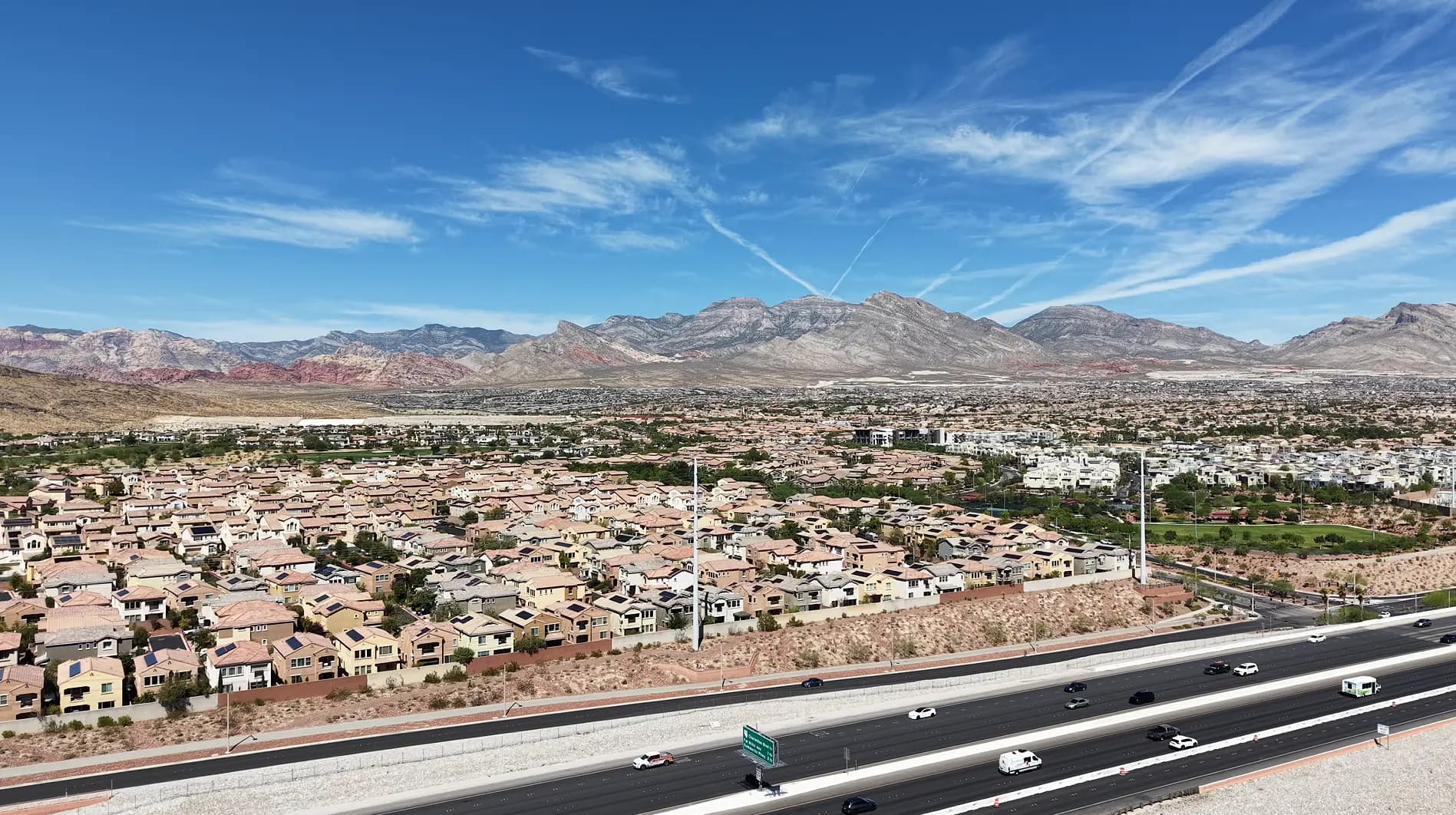
Buyer Guide
Two houses, same price, same bedroom count. One is brand new, with a builder flag snapping out front and a design center appointment on the calendar. The other is fifteen years old on a street where the trees have finally filled in, and the last owner already put in the pool. On a search results page they look like the same purchase. They are not, and the difference usually does not surface until you are already under contract.
I am not going to tell you which one to buy. Anyone who answers that without seeing your budget, your timeline and your commute is guessing. What I can do is show you where the two actually diverge, because in Las Vegas the gap between them is wider than it looks and almost none of it lives in the list price. If you are still choosing an area first, do that in the area comparison and come back here after.
The short version, on camera
Five minutes on the same question, including the parts that are easier to show than to write.
The list price and the finished price are two different numbers
This is the whole article in one idea, so I will spend a minute on it. A resale listing is a price for a house that already exists, in the condition you walked through. A builder’s advertised price is a starting point for a house that does not exist yet, on a homesite that may not be the one you want, with finishes you have not chosen.
Neither of those is dishonest. They are just different kinds of number, and comparing them side by side is the most common mistake I see. Here is what typically sits between a builder’s advertised price and the number you actually spend.
The lot
Advertised base pricing is usually written against a base homesite. A corner, a view, a bigger yard, or backing to open space instead of another house typically carries a premium on top.
Structural options
A fourth bedroom, a casita, an extended garage bay, a covered patio, a second-floor loft. These get chosen before the slab goes down and cannot be added later without real money.
Design center selections
Flooring, counters, cabinets, fixtures, and the electrical you will wish you had run. Base finishes are real finishes, but most buyers do not stop at base.
Window coverings
Almost never included, and a whole house of them is not a small number in a valley where west-facing glass matters.
The backyard
Frequently delivered as graded dirt or rock behind the fence. Landscaping, irrigation, hardscape, a patio cover and a pool are all post-closing costs, and they are usually the largest ones.
The everyday things
Refrigerator, washer and dryer, ceiling fans, garage storage, epoxy, screens, a water softener. Individually small, collectively not.
None of that is a knock on builders. Options and premiums are how the model works, and plenty of buyers happily pay for them because they get exactly the house they wanted. The point is only that the number on the sign and the number on your closing statement are rarely the same number, and the gap between them is where the real comparison happens.
For scale on the local market: in July 2026, the last month with both data sets out, the median closing price for a new-construction single-family home in Southern Nevada was $581,930, against a $480,000 median for an existing single-family resale in the same month. That is roughly a 21% gap. It is a snapshot of two different products, not the price difference between two specific homes, and I unpack it properly in the new-home sales piece and the resale market piece.
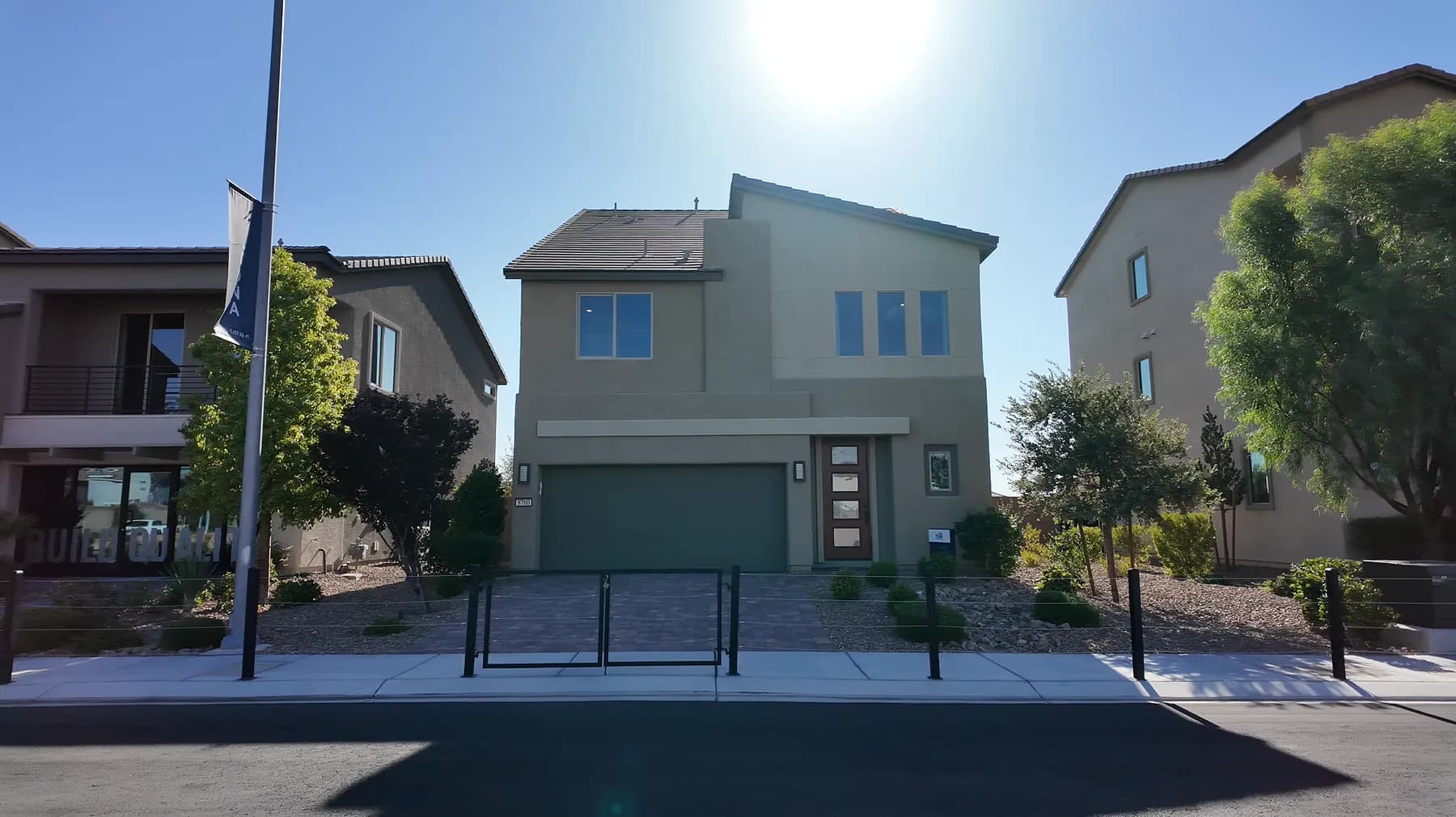
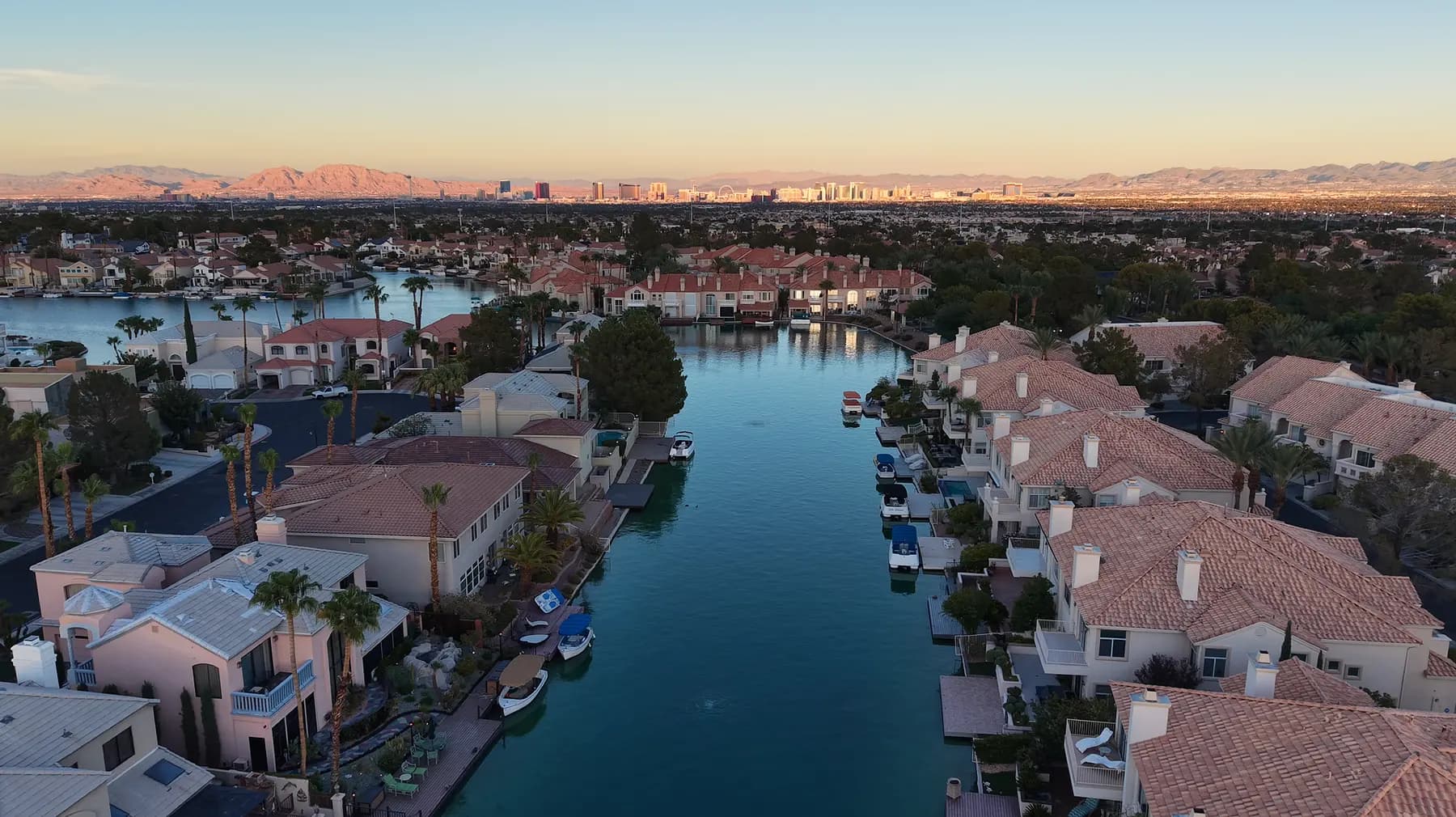
What a resale home may already have paid for
The strongest argument for resale is not that it is cheaper. Sometimes it is not. The argument is that a lived-in home has usually already absorbed the costs that hit a new-build buyer in the first eighteen months, and absorbed them at somebody else’s expense.
The backyard is the big one. A finished yard here is not a weekend project. It is grading, irrigation on a timer, hardscape, a patio cover that actually casts shade, and often a pool. On a resale that work is done, grown in, and baked into a price the market has already tested. On a new build it is a line item you carry after closing, when your savings are at their thinnest.
Then the quiet ones. Window coverings on every window. Flooring the previous owner upgraded out of builder base. Garage storage and shelving. Ceiling fans. A water softener. Screens. Landscape lighting. None of these are exciting and all of them cost money, and on a resale they usually convey.
And shade, which is a real asset here. A tree that throws shade on a west wall took ten or fifteen years to get that way. You cannot buy that at a design center, and in a valley where summer decides how you live, it is worth more than it sounds.
The honest caveat: none of this is automatic. Plenty of resale homes have a dirt yard, base carpet and no coverings, and plenty have a pool that is about to need a new pump. Resale is not a feature list. It is an opportunity to buy work that is already done, and you still have to check what condition that work is in.
What new construction actually gives you
The case for a new build is just as real, and it is mostly about the things you do not think about until they fail.
Everything is new at once. Roof, air conditioning, water heater, plumbing, electrical, appliances. In a climate that runs air conditioning half the year, starting the clock at zero on every one of those is worth something specific: for the first stretch of ownership your maintenance line is close to nothing, and you know roughly when each item comes due, because they all started together.
The floorplan reflects how people live now. Bigger primary suites, more usable open space, flex rooms that can be an office, better-placed laundry, more storage designed in rather than added later. Walk a 2005 floorplan and a current one back to back and the difference is not subtle.
You get to choose instead of inherit. Finishes, layout options, where the outlets go. If you have ever bought a house and immediately spent money undoing someone else’s taste, that has a value you already understand.
And there is a warranty. Most builders provide a limited warranty on a new home, but the terms are not standardized and they are not all the same. What is covered, for how long, what counts as a defect, and what the process is all vary by builder, so read the actual document rather than assuming. Nevada also has a statutory notice-and-response process governing constructional defect claims on a residence, at NRS 40.600 through 40.695. That is a genuine protection, and it is also a legal process rather than a customer service line. This is a guide, not legal advice.
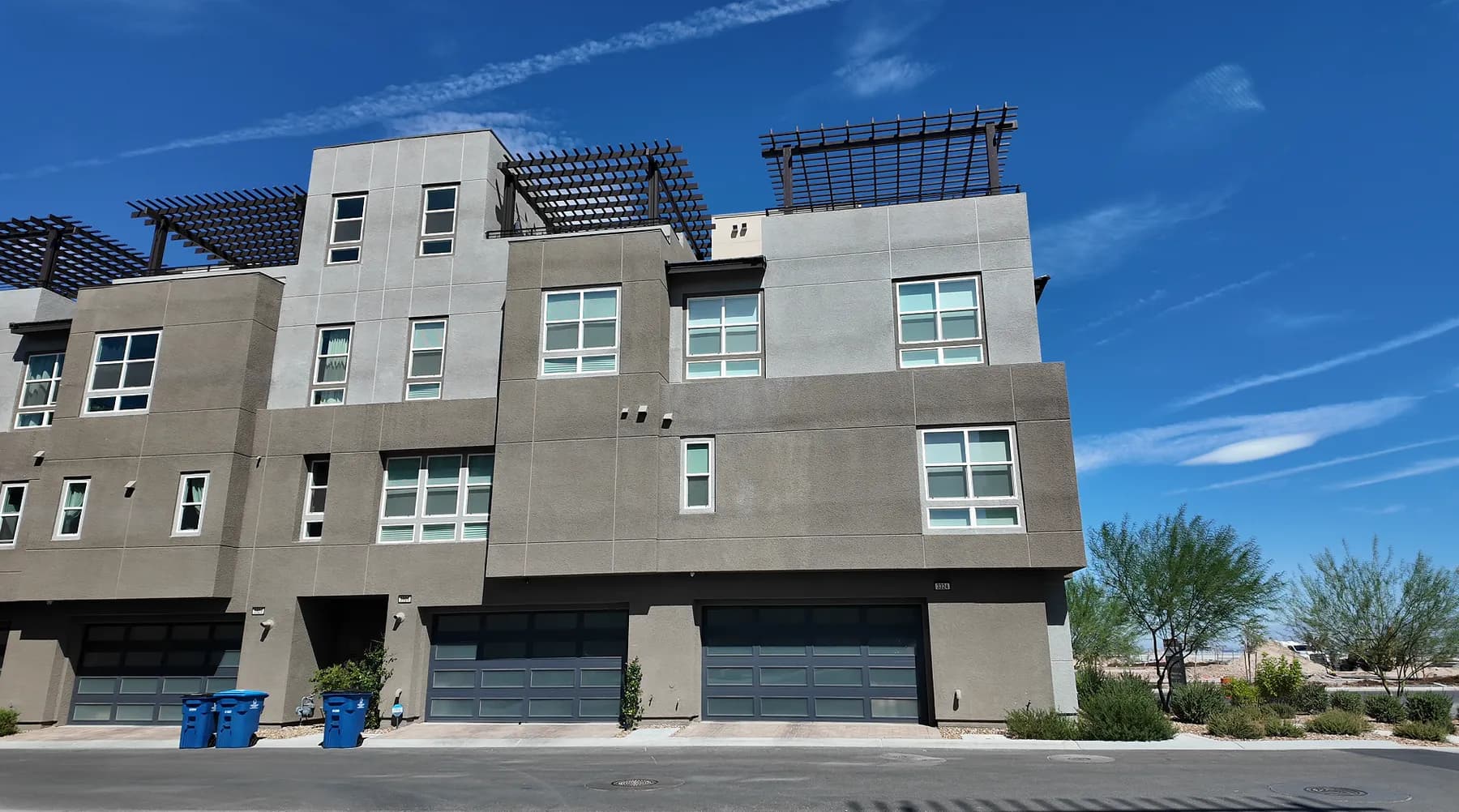
Builder incentives can move the monthly number more than the price does
This is the part that makes a straight price comparison fall apart, and it is the part buyers get wrong in both directions.
Builders have levers a private seller mostly does not. They can credit closing costs, credit design center dollars, or buy down your interest rate, and any of those can change a monthly payment more than a five-figure price cut would. Nationally, the August 2026 NAHB/Wells Fargo Housing Market Index found 63% of builders using sales incentives, unchanged from the month before, with 35% cutting prices at an average reduction of 6%. That is a national builder survey rather than a Las Vegas figure, but it tells you the environment: incentives have been a standing part of how new homes get sold, not a rare event.
Here is the discipline, though. A builder incentive is almost always conditional, and it is almost always temporary.
It usually requires the preferred lender. That is not a scam, it is the mechanism. But it does mean the incentive and the loan pricing are a package, so the only fair comparison is the whole package against a competing quote on the same house. Get the second quote anyway. A good preferred lender will survive it.
Ask whether a buydown is temporary or permanent. A permanent buydown lowers the rate for the life of the loan. A temporary one lowers it for the first year or few, then steps back up to the note rate. Both are legitimate, and they are completely different commitments. The question is not what the payment is now. It is what the payment becomes when the buydown ends, and whether you can carry that number.
And it can be gone next month. Incentives get set per builder, per community, sometimes per phase or per standing-inventory home, and they move with the market. Nothing on this page should be read as a promise that a particular incentive exists right now where you are shopping. Ask, in writing, for the specific home you are considering.
The other half of this: resale sellers have a version of the same tool. A seller concession can pay closing costs or fund a rate buydown too, and in a market carrying inventory it is negotiable. For context on what you would be buying the rate down from, Freddie Mac put the 30-year fixed average at 6.76% for the week of September 10, 2026, and I track what moves in the mortgage rate guide. If you are early in the process, the down payment assistance guide covers programs that can apply on either side of this comparison.
Which is the bigger point. In this market the decision is not only new build versus resale. It is which home gives you the best total payment once the builder’s incentives, the resale seller’s concessions and the leverage buyers have right now are all on the table. I talk through that tradeoff, and what it is worth with rates near 7%, in a separate video below, and the current market numbers are in Is Las Vegas a Buyer’s Market Right Now?
Related video
Incentives, concessions and a 7% rate
A separate video on today's market: why buyers have leverage again, how builder incentives compare with resale, and what it all means for your monthly payment.
The right question is not which one is cheaper. It is which one is cheaper once it is finished, furnished, and actually livable the way you want to live in it.
Established neighborhoods versus communities still being built
This one usually gets framed as a strike against new construction, and it should not be. It is a genuine tradeoff, and which side you want depends on what you value.
An established neighborhood is verifiable. You can drive it on a Tuesday morning and again on a Saturday night. The grocery store is open. The park is built, and you can see whether anyone uses it. The HOA has a track record you can read. The landscaping is what it is going to be. There is very little left to imagine, which is exactly the point.
A developing community is partly a plan. Some of what is on the site map is under construction, some is entitled, and some is an intention. Retail, parks, trails, schools and road connections generally arrive after the rooftops that justify them, which means the first residents live through the build-out: construction traffic, dust, model-home traffic on your street, a grocery run longer than it will eventually be. In exchange you are early, in a place designed as one thing rather than assembled over decades.
The practical move is to separate what is built from what is promised. Ask which phase you would be in, what is actually under construction right now versus planned, and what the timeline is for the things that made you like the community in the first place. Then decide whether you want to live through that or skip it. Both answers are reasonable. For how differently this plays out across the valley, the guides to Summerlin, Henderson and Southwest Las Vegas each cover what is still being built in them.
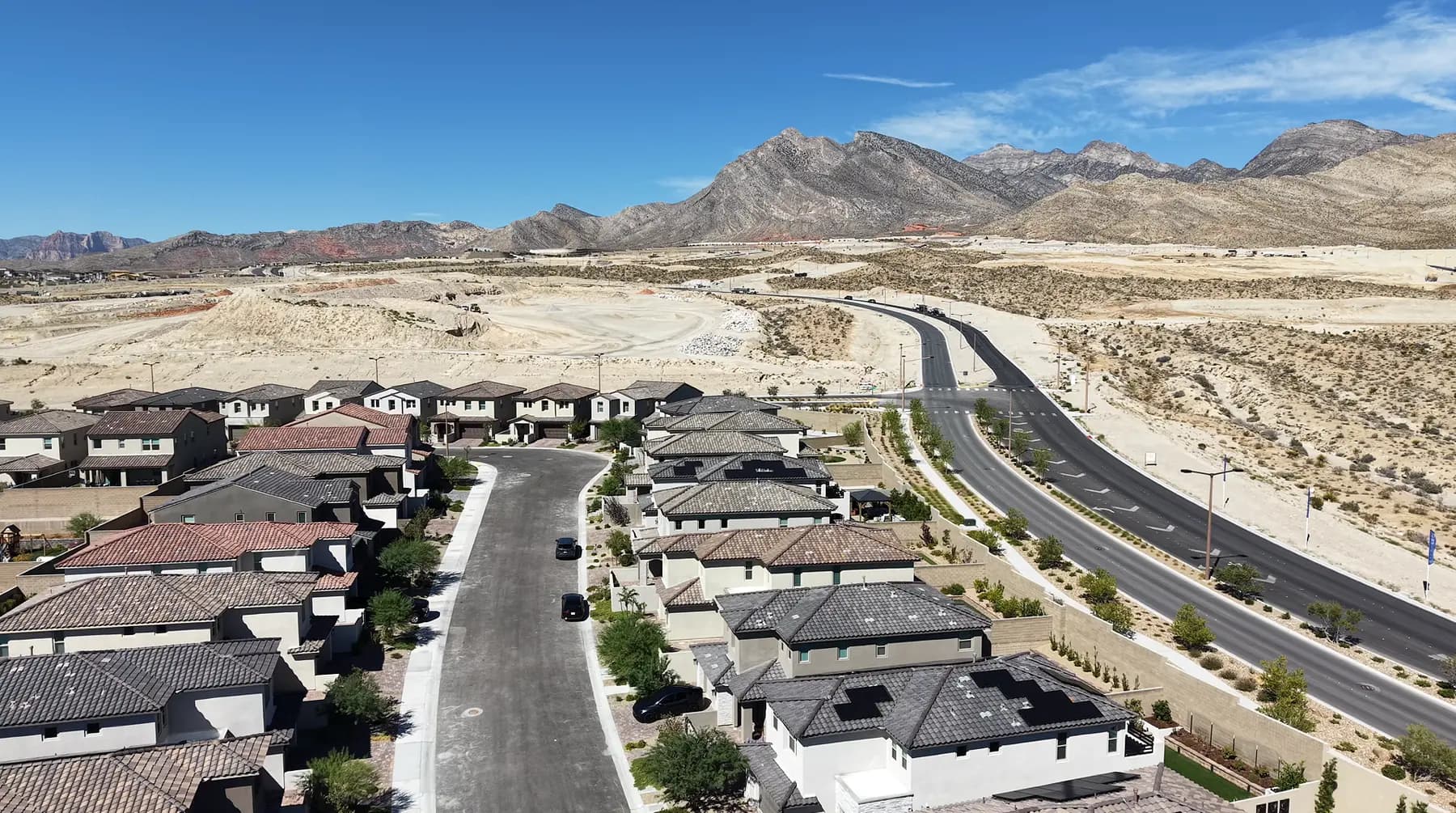

New does not mean perfect. Old does not mean problem.
I would get an inspection on either one, and I say that to every buyer who asks. The reasons are just different.
On a new build, the municipal inspections are not your inspection. Those confirm the work met code at set stages. They are not an independent review done on your behalf, they are not looking out for your interests specifically, and a house can pass every one of them and still hand you a punch list. Houses get built fast, by people, in the heat. An independent inspector looks at grading and drainage away from the foundation, roof and stucco details, insulation that is missing or in the wrong place, and systems that were installed but never balanced. If your builder allows a pre-drywall walk, take it. That is the only time anyone sees the framing, the rough plumbing and the wiring again.
On a resale, the inspection is a budget, not a verdict. A twenty-year-old house is not a bad house. It is a house with a known maintenance schedule, and the inspection tells you where on that schedule you are standing: how much roof is left, how old the air conditioning is, what the water heater is about to do, whether the pool equipment is original. None of that has to kill a deal. It just has to be priced, either into the offer or into your first two years.
Either way, hire someone certified. Nevada certifies home inspectors through the Real Estate Division of the Department of Business and Industry, and NRS 645D.160 makes acting as an inspector in this state without that certificate a misdemeanor. Ask for the certificate number. It is a normal question, and any good inspector answers it without blinking.
The ownership costs that show up on neither listing
Two homes at the same price can carry very different monthly numbers in this county, and the reasons are usually invisible until escrow.
Property taxes. Nevada caps annual increases for an owner-occupied primary residence, but that cap is tied to the owner claiming it rather than riding along with the house. Recording a new deed removes the previous owner’s owner-occupied designation, which means the tax figure printed on a resale listing is the seller’s number and not necessarily yours. This catches people on both new construction and resale, and it is worth understanding before you build a budget around a listing figure. The full mechanics, with sources, are in the property tax guide.
Special assessments, the SID and LID kind. These fund infrastructure, and they are frequently attached to newer construction, because someone had to pay for the roads and utilities that made the subdivision possible. Clark County is clear that special assessments are different from real property taxes and are billed separately, and that an assessment is a lien on the property until it is paid off. There is no typical amount, because it is parcel specific. Ask for the actual balance on the actual property.
HOA dues, and sometimes a second layer. In a large master-planned community you can be paying a master assessment and a neighborhood sub-association on top of it. That is normal here and it is not a criticism, but it does mean “the HOA is sixty dollars” is rarely the whole answer. Get every line.
And the cost to finish. Put the new build’s backyard, coverings and appliances on the same sheet as the resale’s roof, air conditioning and updates. That is the only version of this comparison where the two numbers mean the same thing.
How to actually compare the two
If you take one thing from this page, take this list. Run both homes through all seven lines before you fall in love with either.
Finished cost, not list price
Price plus everything the home still needs to be livable the way you want it. On a new build that is usually the yard, the coverings and the appliances. On a resale it is whatever the last owner deferred.
The full monthly number
Payment, HOA dues, any master or community assessment, any special assessment attached to the parcel, insurance, utilities, and the property tax the parcel will actually carry once you own it.
Timeline
A resale can close in weeks. A build can take months, and the rate you can lock and the payment you end up with may not be the ones you started with.
Location, judged on a normal day
Drive the route at the hour you would actually drive it, both directions. This is the easiest thing on the list to check and the one buyers skip most.
Neighborhood maturity
Established means you can see what you are getting. Still building means you are partly buying a plan. Neither is wrong, but only one of them is verifiable today.
What you would change either way
Price out the resale's updates and the new build's finishing costs on the same sheet. Then the two numbers finally mean the same thing.
How long you actually plan to stay
Short horizons make finishing costs hurt more, because you pay them up front and only get part of them back. Long horizons make deferred maintenance hurt more.
The bottom line
There is no winner here, and I would be suspicious of anyone who hands you one. New construction sells you time you do not have to spend on maintenance, a floorplan built for how people live now, and the chance to pick your own finishes. Resale sells you a finished product in a neighborhood you can verify today, with somebody else’s money already sunk into the yard, the coverings and the trees.
What actually decides it is narrower than the debate suggests. Which one costs less once it is finished the way you want it. Which one costs less every month once every line is on the page. And which one sits where your week actually happens. Answer those three honestly and the choice usually makes itself.
If it still does not, that is a sign the two homes are genuinely close, which is a good problem to have. Go drive both neighborhoods at the hour you would really be driving them, and buy the one you would rather come home to.
Common questions
Is new construction more expensive than resale in Las Vegas?
- In July 2026, the latest month with both data sets published, the median closing price for a new-construction single-family home in Southern Nevada was $581,930 (Home Builders Research, reported by the Las Vegas Review-Journal), against a $480,000 median for an existing single-family resale (Las Vegas REALTORS) in the same month. That is a gap of about 21%. It is not a like-for-like comparison, though: new and existing homes differ in size, age, location and condition, and a builder’s price can move with incentives that a median never captures. Treat it as the shape of the market, not as the price difference between two specific homes. The full numbers are in the new-home sales report.
Do Las Vegas builders offer better mortgage rates than resale sellers?
- Sometimes, and usually with conditions. Builder financing incentives are typically tied to using the builder’s preferred lender, and they are offered community by community and phase by phase rather than as a standing policy. Nationally, the August 2026 NAHB/Wells Fargo Housing Market Index found 63% of builders using sales incentives, unchanged from July. None of that makes a builder rate automatically better than what you could get on a resale home. Compare the full cost of the loan rather than the headline rate, ask whether a buydown is temporary or permanent and what the payment becomes when it ends, and get at least one competing quote. Resale sellers can offer concessions that do similar work.
Should you get a home inspection on a brand-new Las Vegas home?
- Yes, and the municipal inspections a builder passes are not a substitute. Those confirm the work met code at set stages of construction; they are not an independent review done on your behalf. Nevada certifies home inspectors through the Real Estate Division of the Department of Business and Industry, and NRS 645D.160 makes acting as an inspector without that certificate a misdemeanor, so you are hiring a regulated professional either way. On a new build, an inspection catches grading and drainage, roof and stucco details, missing or misplaced insulation, and systems that were installed but never balanced. On a resale, it tells you what the next ten years of maintenance actually look like.
What should you compare besides the purchase price?
- Compare the finished cost and the full monthly cost. Finished cost means the price plus everything the home still needs before it is livable the way you want it: backyard, landscaping, window coverings, flooring, appliances and storage on a new build, or repairs, replacements and updates on a resale. Monthly cost means the payment plus HOA dues, any master or community assessment, any special assessment such as a SID or LID attached to the parcel, insurance, utilities and the property tax the parcel will actually carry under your ownership. In Nevada, the owner-occupied tax cap is tied to the owner’s claim rather than passed along automatically with the house, so the seller’s tax figure is not necessarily yours.
Sources
- NAHB/Wells Fargo Housing Market Index, August 2026. Source for the national builder incentive and price-cut figures (63% using sales incentives, 35% cutting prices, average reduction 6%), released August 17, 2026, at eyeonhousing.org. National survey data, not Las Vegas specific.
- Freddie Mac. Primary Mortgage Market Survey, week of September 10, 2026, source for the 6.76% 30-year fixed average, at freddiemac.com/pmms.
- Home Builders Research and Las Vegas REALTORS, July 2026, for the $581,930 new-construction and $480,000 resale single-family medians. Both are cited from LVINIT’s own already-sourced coverage, new-home sales and resale prices, where the primary reporting is linked in full.
- Nevada Revised Statutes. NRS 645D.160, requiring certification to act as an inspector of structures in Nevada, at leg.state.nv.us.
- Nevada Revised Statutes. NRS 40.600 through 40.695, the constructional defect notice and response provisions for a residence, at leg.state.nv.us.
- Clark County. Property tax and special assessment mechanics, including the owner-occupied designation and the separate billing of special assessments, are carried from LVINIT’s Nevada property tax guide, which holds the full Assessor and Treasurer source list.
Builder incentives, loan pricing, warranty terms, assessments and community build-out schedules change constantly and vary by builder, community and parcel. Nothing here is a representation that a particular incentive, rate or program is available to you. This article is general information, not tax, legal, or financial advice. Verify anything property specific with the builder, the lender, the HOA, and the Clark County Assessor and Treasurer before you rely on it.
About this coverage
Mikey Del Rosario · Las Vegas Real Estate Advisor · The Scofield Group · Nevada License S.0175577. Equal Housing Opportunity.