Comparisons
These three come up in almost every relocation conversation I have, usually in the same breath, usually as if they are three versions of the same thing. They are not. Before you compare a single listing across them, you need to know that you are comparing three completely different kinds of thing, and that one difference quietly decides almost everything else on this page.
I am not going to hand you a winner. Anyone who does that for three places this different is selling you something. What I can do is lay out the real differences and let you match them to how you actually want to live. The long version of each one lives in the Summerlin guide, the Henderson guide and the Southwest Las Vegas guide.
Start with what each one actually is
This is the part almost every comparison skips, and it is the reason most of them are useless. These are not three neighborhoods. They are not even three of the same category of thing.
Summerlin
A master-planned community
One plan, one master developer, one set of design standards, carried out village by village across about thirty-five square miles on the western edge of the valley. It has no mayor and no city limit.
Full guideHenderson
An incorporated city
Nevada's second largest, incorporated in 1953, with its own mayor and council, its own police and fire, its own parks department and its own zoning, across nearly 118.5 square miles. It contains master plans. It is not one.
Full guideSouthwest Las Vegas
A name people use
No city limit, no county boundary, no census place by that name. Mostly unincorporated Clark County, largely the towns of Enterprise and Spring Valley, filled in by many separate builders rather than planned as one thing.
Full guide
Line those up and the problem with the usual comparison is obvious. Asking whether Summerlin beats Henderson is close to asking whether a single planned development beats an entire city. Asking whether Henderson beats the Southwest at least compares two large, varied places, but only one of them has a government you can call. And asking anything about “the Southwest” means asking about a term two people can use to mean two different chunks of the valley, because there is nothing to correct either of them against.
That matters practically, not just semantically. Summerlin can promise consistency because one plan controls it. Henderson can offer range because it has had decades and many different developers. The Southwest can move fast and vary street to street because nobody is coordinating it. Every difference further down this page traces back to those three sentences.
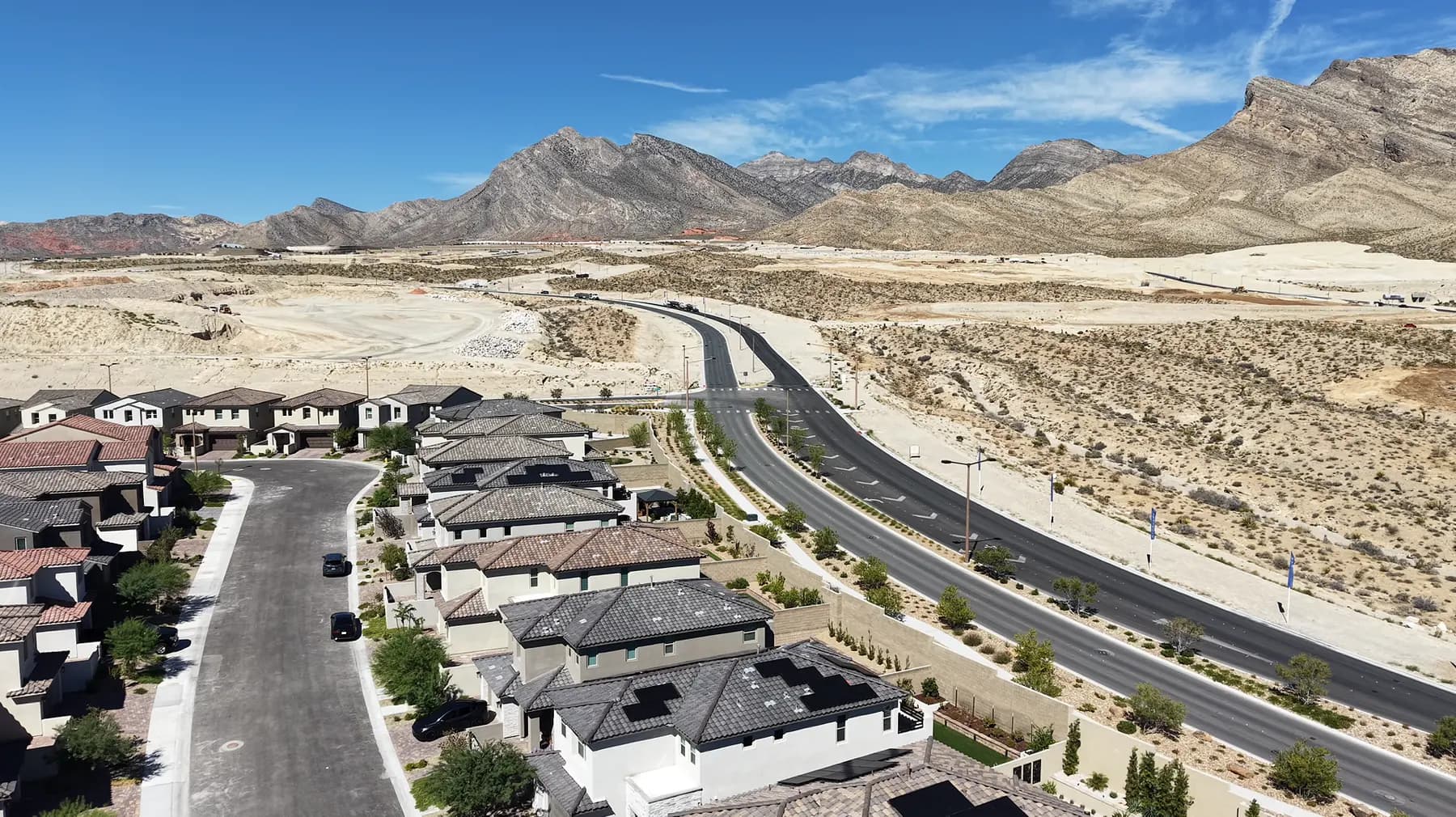
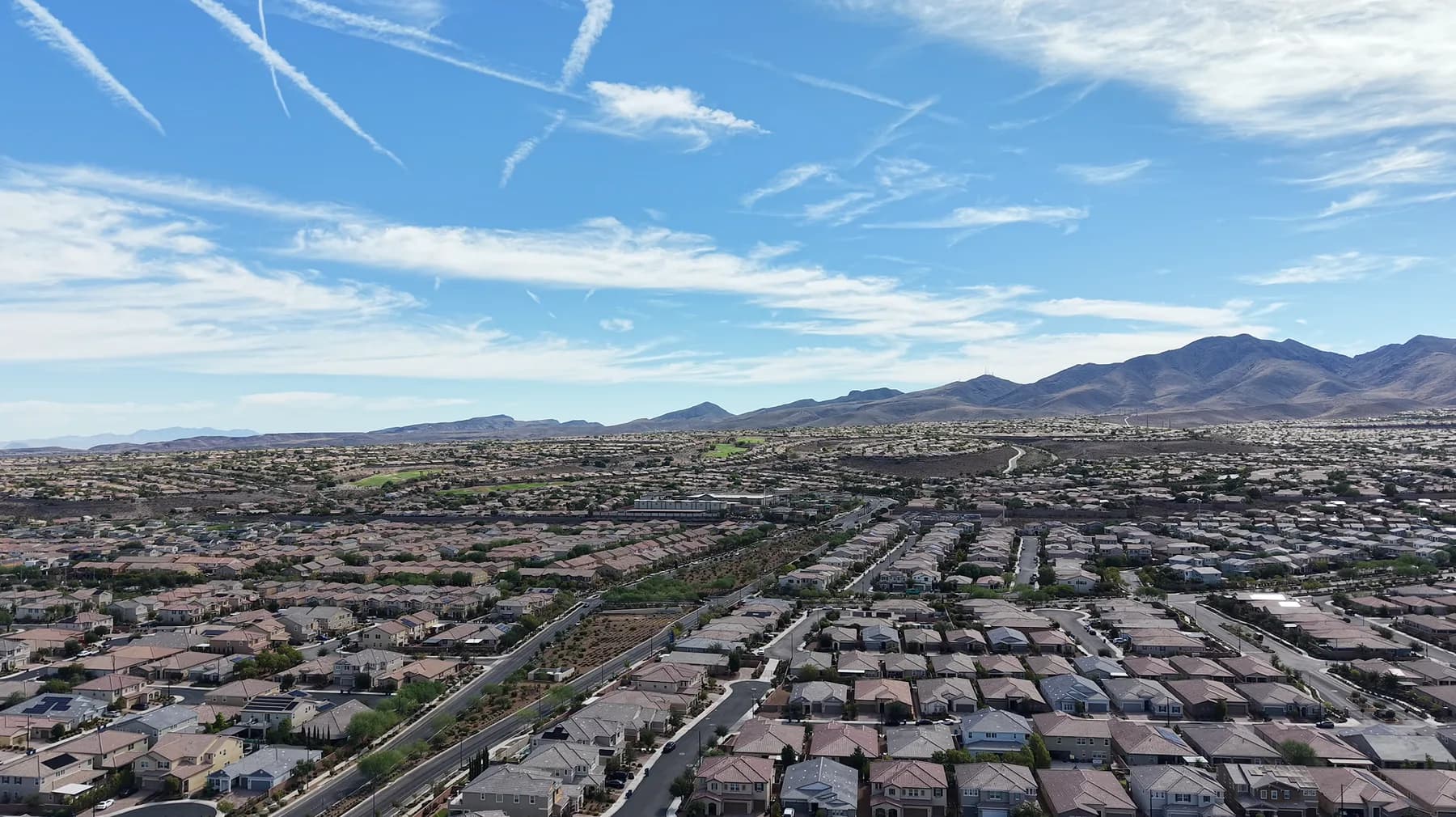
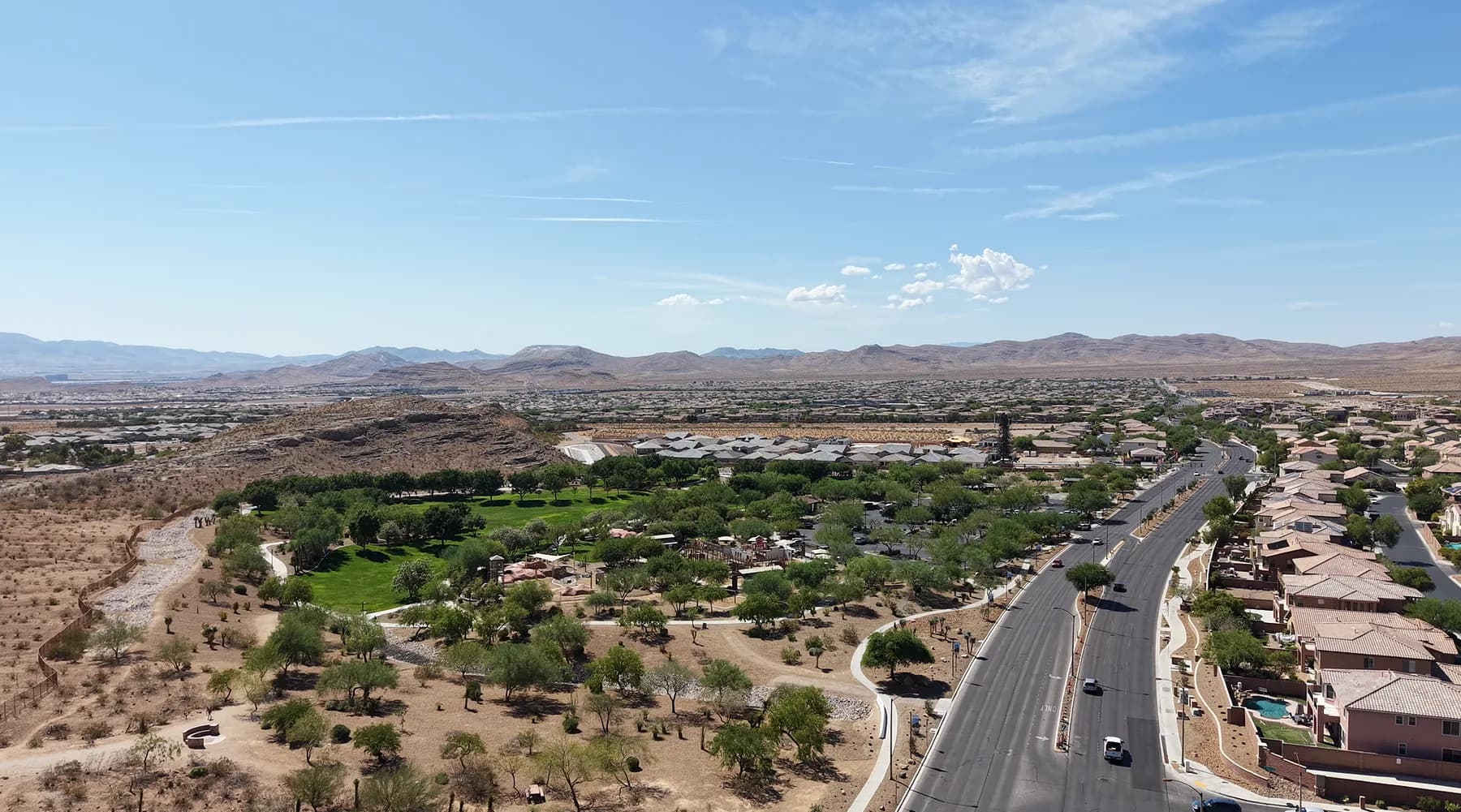
The video version
I walked through this same comparison on camera, including the parts that are easier to show than to describe.
Where does your money go further?
I am not going to publish a median price for any of these three, and you should be suspicious of pages that do. Summerlin and Henderson both span too wide a range for one number to describe, and the Southwest has no agreed boundary to calculate one against in the first place. What I can give you is the shape of the tradeoff, which is more useful anyway.
Summerlin usually asks you to compromise somewhere first. At a given budget something tends to give: square footage, lot size, the age of the home, or how far west and north you are willing to go to find it. That is not a knock on the place. It is what happens when demand concentrates on one master plan with a fixed footprint.
The honest counterpoint is that a real part of what you are buying in Summerlin sits outside the four walls. The master plan itself, the trail system built into the arroyos between villages, more than 300 parks, Red Rock along the western edge, Downtown Summerlin for errands and dinner, and decades of community infrastructure that already exists rather than being promised. Whether that is worth the compromise is a personal question, but it is a real thing you are paying for, not marketing.
Henderson gives you more directions to go. Because it is a city rather than a product, one budget can be spent several genuinely different ways inside it: established resale with grown-in landscaping, brand-new construction in a current master plan, a hillside address, a lake community, or an older downtown. You are not choosing a price point so much as choosing which Henderson you are shopping in, and that choice moves what your money does far more than the city line does.
The Southwest is where the same money most often turns into more house. Newer construction, more square footage, sometimes a bigger lot. The catch is what comes with it, which the next few sections are about. And whichever way you lean, the real comparison is not list price against list price. It is the whole ownership picture, further down this page.
Which area is actually more convenient?
Convenient to what? That is not me dodging. All three of these places are large enough that convenience only means something once you say where you actually spend your time. None of the three LVINIT area guides publishes a commute figure and this page will not either. Henderson runs about seventeen and a half miles east to west, so a Green Valley address and a Lake Las Vegas address are not the same trip. Summerlin is thirty-five square miles. The Southwest has no edges at all. Any page handing you a single number for one of these is guessing.
Summerlin works if your life points west. Red Rock, Downtown Summerlin, the west-side office and medical corridor, the beltway running down the western edge. If your week mostly happens on that side of the valley it is genuinely easy. If your office is off the Strip or your family is in Henderson, drive it at your actual hour before the mountain views talk you into it.
Henderson convenience varies more than anywhere else in this comparison. Green Valley and the communities along the 215 are geographically a different proposition from Lake Las Vegas, which sits well east of almost everything. Two people can both say they live in Henderson and have completely unrelated daily drives. Pick the corner first, then judge the commute.
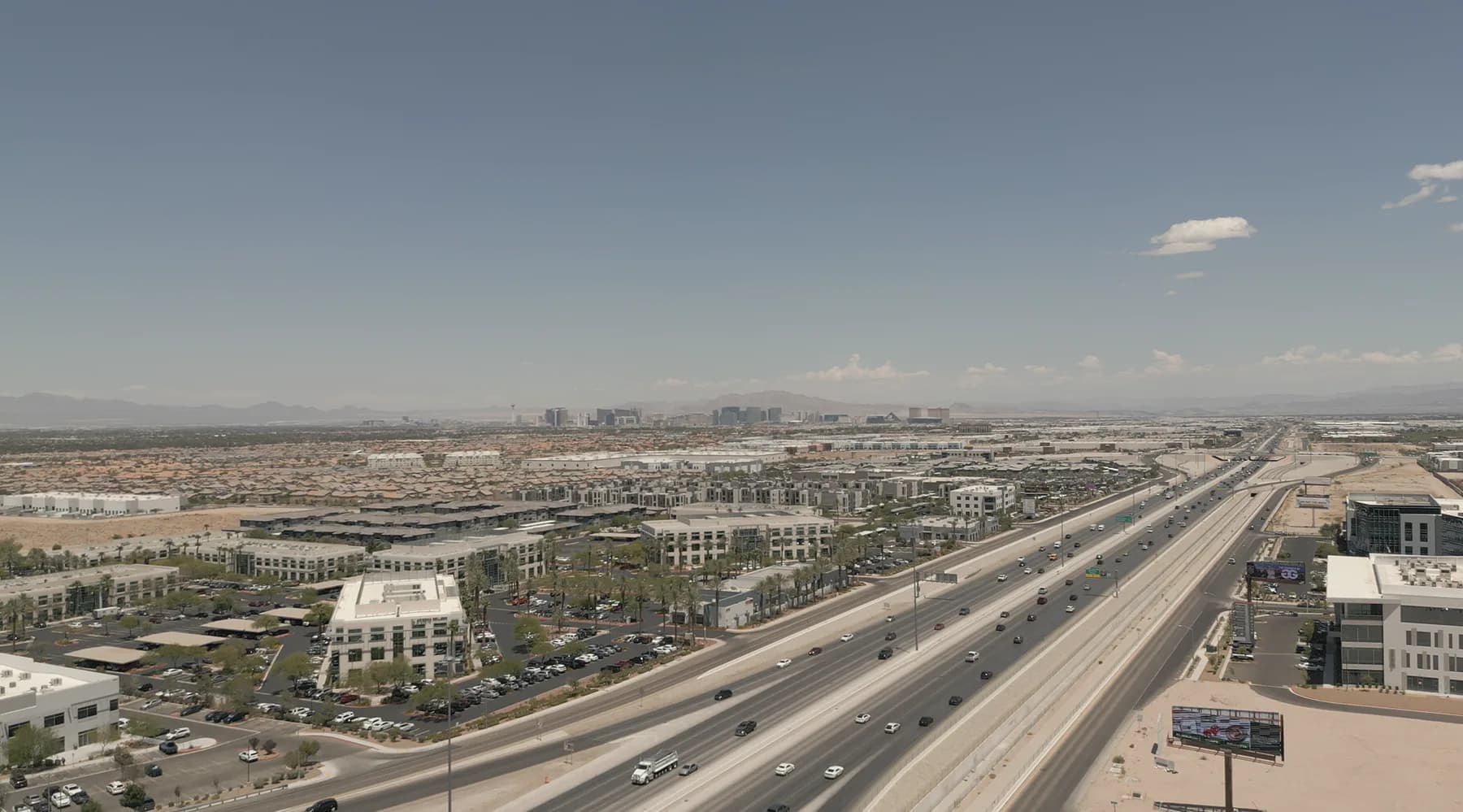
The Southwest’s position on the beltway is its strongest practical argument. The whole area is oriented to the 215, which is also the road running north toward Summerlin and east toward the airport. If your routine is spread across several parts of the valley rather than anchored in one, that matters more than any single drive time. It is the most common reason I see people who started out looking at Summerlin buy out here instead.
Where can you still buy new construction?
All three, and that surprises people. New construction is not a Southwest-only story. The difference is in how it arrives, not whether it exists.
Summerlin keeps expanding westward. Summerlin West is where the current villages are going in, and the master developer opens new neighborhoods there on a rolling basis. You are buying inside an existing plan, which is the point: the standards, the trail connections and the eventual parks are decided before your street exists.
Henderson has its own growth areas. Inspirada, Cadence and the broader West Henderson planning area are where the newer housing is concentrated, and West Henderson in particular has an employment corridor forming around it that the other two have no real equivalent of.
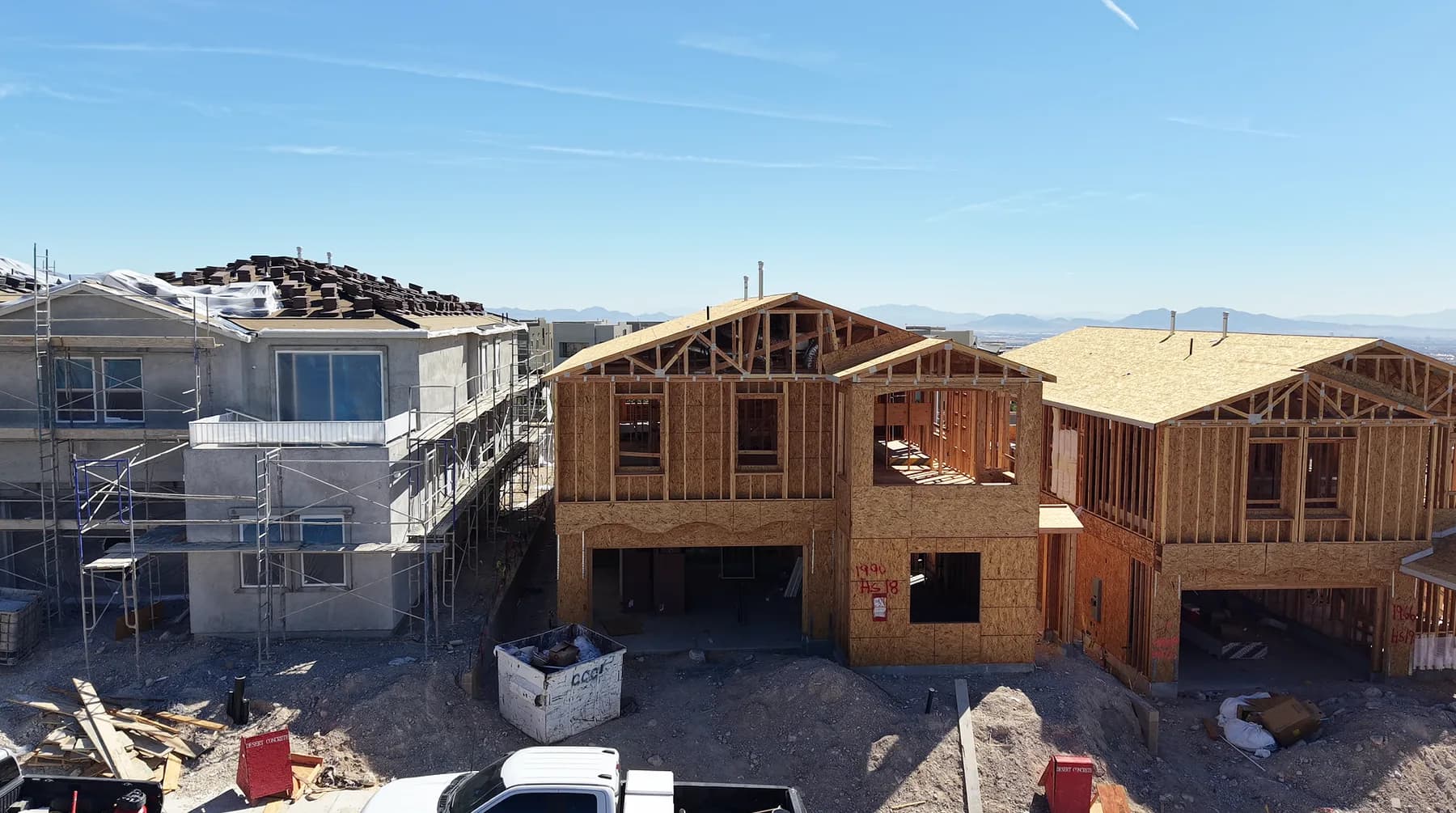
The Southwest builds by infill. Instead of one plan advancing in one direction, many builders fill in many separate parcels, which is why housing age can change from one street to the next. It is also why the Southwest often has the most genuinely new homes listed at any given moment.
Here is the distinction that actually costs people money. A new home is not the same thing as a finished neighborhood. Before you sign on a new build in any of these three, get straight answers on what is complete and what is not. Are the surrounding arterials built or still dirt? Is the retail open, under construction, approved, or only drawn on a plan? Are the parks in your phase funded and scheduled, or in a later phase with no date? What is going on the vacant parcel behind you, and who decides? Those answers are the difference between moving into a neighborhood and moving into a construction zone with a nice kitchen.
Which area feels most established?
Not one of these three has a single uniform character, and anyone who tells you otherwise has not spent much time in them.
Inside Summerlin, the older villages and the newest ones feel almost nothing alike. The eastern and central villages have had decades to grow in, with mature landscaping, filled-in trails and established retail. Summerlin West is still arriving: newer streets, younger trees, parks in phases. Same master plan, same standards, two very different daily experiences.
Henderson has the widest spread of the three, because it has been building the longest and under the most different hands. Green Valley was Southern Nevada’s first master-planned community, with a 1978 grand opening, and it reads that way on the ground. The Water Street District is older still. Inspirada and Cadence are current. Those are not variations on a theme, they are different eras sharing a city.
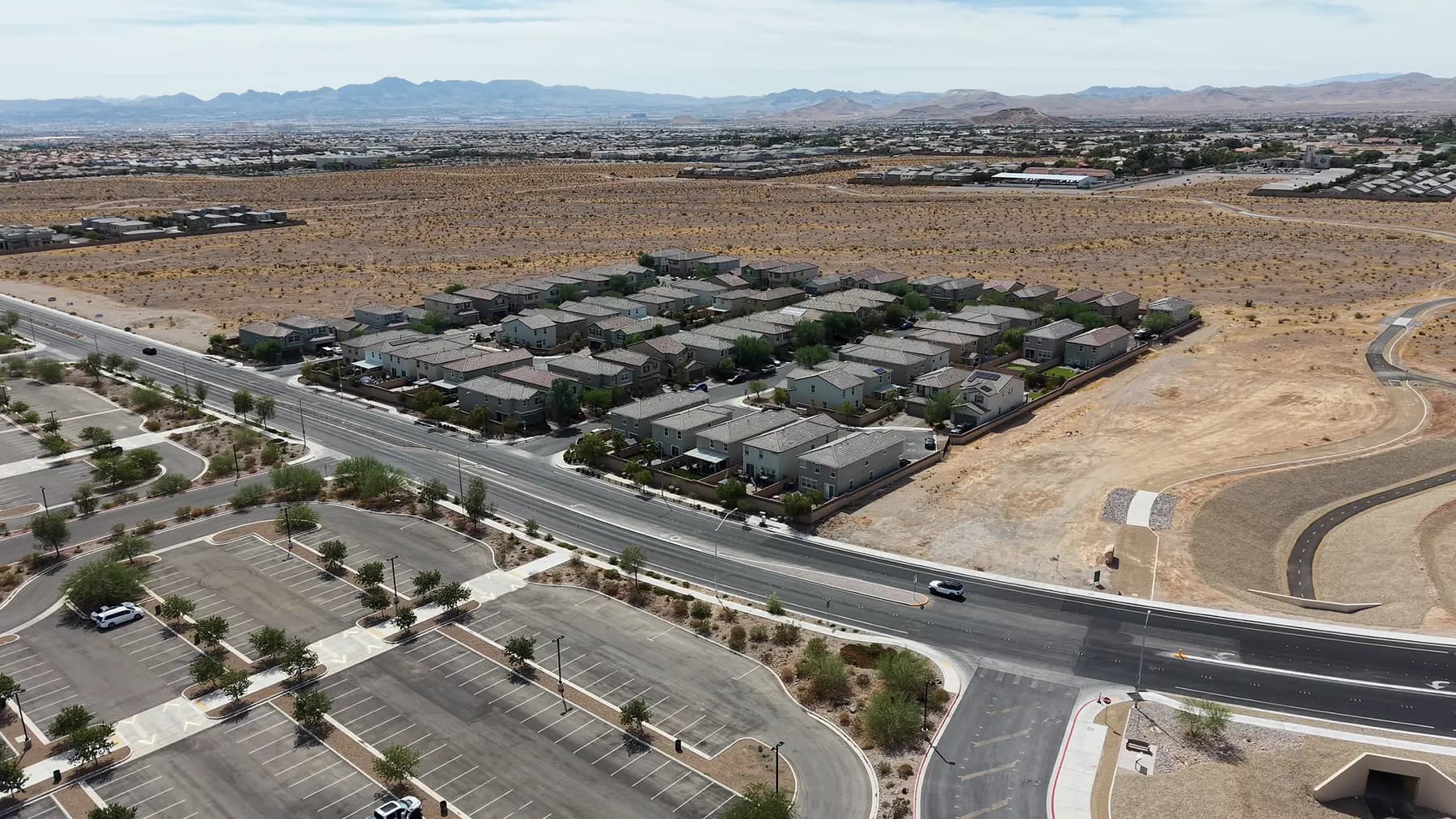
The Southwest holds both at once, often within a mile. Mountain’s Edge, Southern Highlands and Rhodes Ranch have been in the ground long enough to feel settled. A few streets away you will find a finished block that ends at a wall, a sidewalk that stops, and raw desert with a road already cut through it. None of that is decline. It is a place that is still being written. But if half-built horizons would wear on you over a few years, that is worth knowing before you buy rather than after.
What kind of house do you actually want?
This is usually the question that unlocks the whole thing. People arrive trying to pick an area and get stuck, because area is the hard way in. Describe the house and the week you want, and the map narrows itself.
A few common ones. Treat these as starting points for where to look first, not as recommendations. Every one of them has exceptions in all three areas.
- A newer home, parks and trails out the door, restaurants you can get to without making a project of it, and no particular need for a big yard.
- Start in SummerlinThis is the trade the master plan is built around. You are likely giving up lot size and some square footage to get the surroundings.
- An older home with some character, mature landscaping, and streets that have had decades to grow in.
- Start in the established parts of HendersonGreen Valley was Southern Nevada's first master-planned community, with a 1978 grand opening, and it reads that way on the ground. Water Street is older still.
- Four bedrooms, a usable yard, quick freeway access, and a budget you are being honest about.
- Start in the SouthwestNewer housing, a lot of it, hung off the beltway. This is where the same money most often turns into more house.
- Elevation, a long view, and a budget that can carry a custom hillside address.
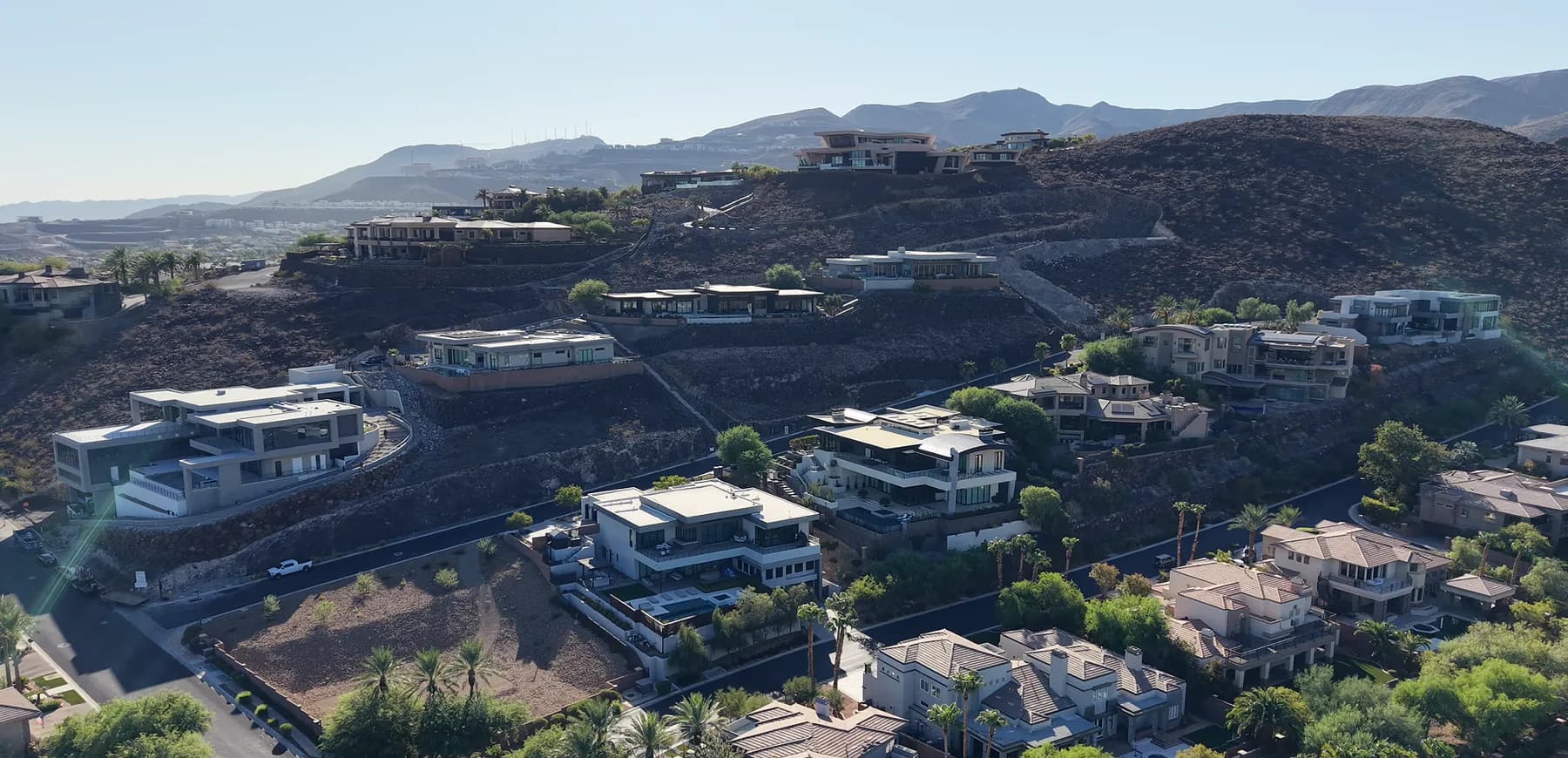
- That is a different search entirelyIt usually means luxury Summerlin, or MacDonald Highlands and Ascaya on the Henderson side. Worth naming early, because it narrows the map fast.
If schools are part of your decision, and for a lot of people they are, do that research independently rather than taking any agent’s word for it, mine included. Attendance zones do not follow community names, they change, and the answer for your specific address is the only one worth having. Start with the Clark County School District zone lookup and the state’s own school reports.
Parks, trails and what is actually around you
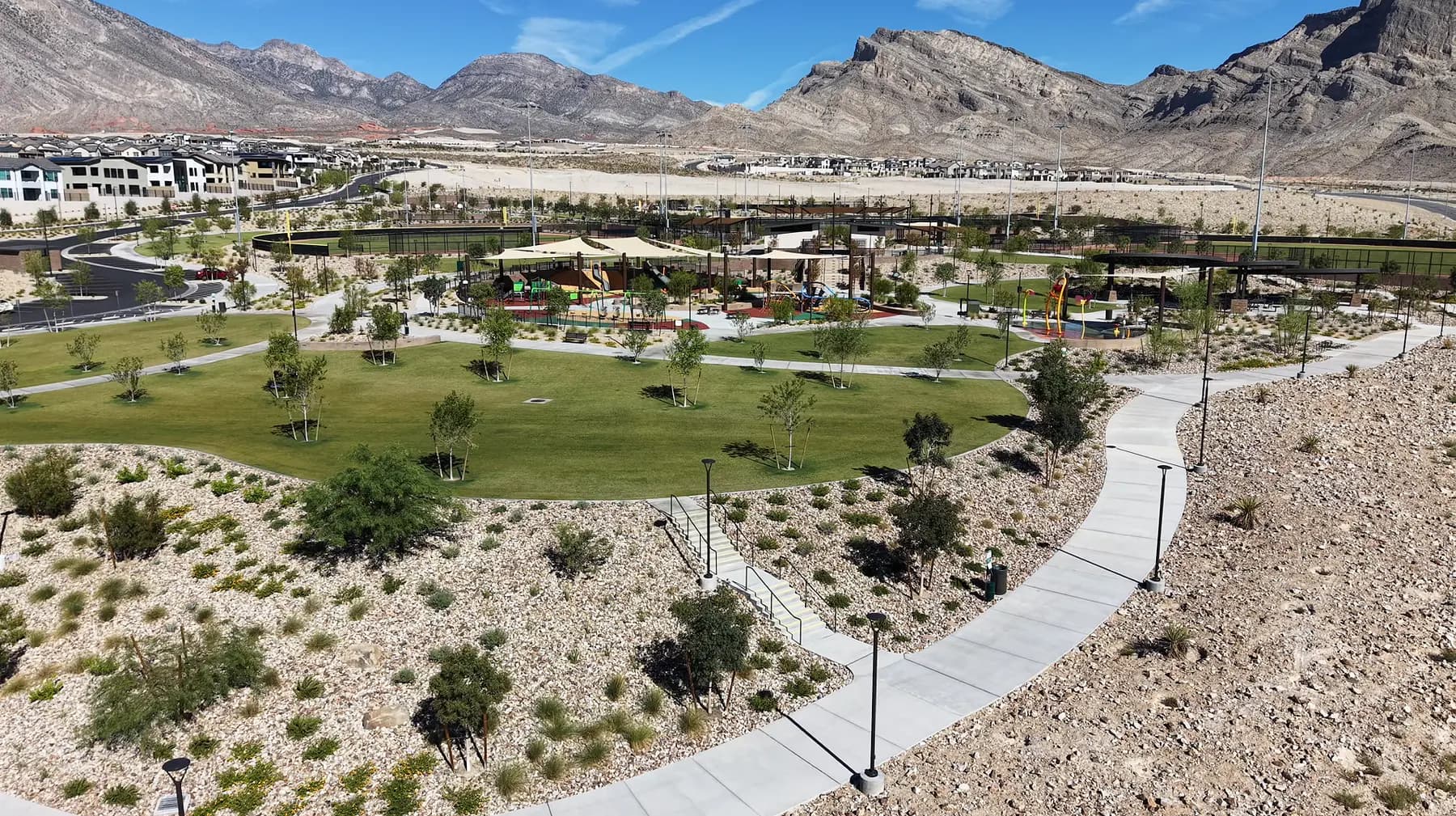
Summerlin has the clearest advantage here, and it is worth being precise about why. More than 300 parks, nearly 40 of them major community parks, and more than 200 miles of interconnected trails. What makes that work is not the mileage, it is that the trails were designed into the arroyos between villages instead of added afterwards, so getting to a park often does not involve crossing an arterial. That is genuinely rare in this valley.
Red Rock Canyon National Conservation Area forms the western boundary, which is why the master plan stops where it does. Two honest caveats, both of which are on the full Summerlin guide. Proximity is not evenly distributed: Summerlin is thirty-five square miles, and from an eastern village the canyon is a drive like it is for everyone else. And from 1 October through 31 May the scenic drive needs a timed-entry reservation between 8am and 5pm, so the spontaneous Saturday drive up the canyon is mostly a summer thing.
Henderson runs a real municipal park system, which is a different model. It is a city department, funded and maintained by the city, and Sloan Canyon National Conservation Area sits on its southern side. The Southwest has more than people expect too, including Exploration Peak and the trail network through Mountain’s Edge, though it arrived community by community rather than as one plan.
The question I would actually put to yourself: how often will you use any of it? Trail access is worth paying for if you are out there on a Tuesday morning. It is worth much less if the honest answer is twice a year, and twice a year is a completely reasonable answer. A lot of people pay a premium for outdoor access they never touch, then feel the square footage they gave up for it every single day.
HOAs, assessments, SID and LID, and what it really costs to own
This is the section I would keep if I had to delete every other one.
Take a $650,000 home in Summerlin and a $650,000 home in the Southwest. Same list price. They are almost certainly not the same cost to own, and the gap is not small. The pieces stack differently in each area, and only one of those pieces shows up in the listing.
HOA dues can apply in all three areas, and the amount varies by neighborhood far more than it varies by area. Some Henderson and Southwest neighborhoods have no traditional HOA at all, which buyers are sometimes delighted and sometimes horrified to discover.
Summerlin adds a layer the other two generally do not. Alongside whatever your specific neighborhood association charges, Summerlin properties sit under a community-level master association. As a concrete example of how that structure works, the published 2026 monthly master assessments were $74 in Summerlin North, $76 in Summerlin South and $69 in Summerlin West, each already including the Summerlin Council’s $37 share. Read those as an illustration of the layers, not as what any given home pays. They are the master figure only, your neighborhood sub-association sits on top, and neither number is the same across Summerlin.
Then there is SID and LID. A Special Improvement District or Local Improvement District lets a local government finance public infrastructure with bonds and assign a repayment assessment to every parcel inside the district. They turn up most often on newer construction, in all three areas. The part people miss is in Clark County’s own words: special assessments are different from real property taxes and are billed separately, and an assessment is a lien on the property until it is paid off. Checking the property tax figure does not tell you whether one is attached. Ask for the disclosure, pull the parcel record, and read Schedule B of the title commitment during escrow.
I am not going to publish typical dollar amounts for any of this, because there is no such thing. HOA dues, master assessments, SID and LID balances and the tax figure are all parcel-specific, and every one of them has to be verified against the actual property. Anyone quoting you an area-wide number is making it up.
What to compare instead of list price
- List price
- The only number most people compare, and the only one that means the same thing everywhere.
- Master or community assessment
- Where one applies. Summerlin has these. Many Southwest and Henderson neighborhoods do not.
- Neighborhood HOA dues
- The sub-association for your specific street or gate. Separate from any master assessment, and it varies enormously.
- SID or LID balance
- Where one is attached to the parcel. Common on newer construction. Billed separately from property taxes.
- Property taxes on that parcel
- Including which tax cap the property is actually carrying once it changes hands.
- Property-specific costs
- Lot premium, upgrades, a pool, or an age that is about to need a roof and two air conditioners.
What it actually costs you to own
One more piece worth understanding before you compare anything: how Nevada’s property tax cap works, and what happens to it when a home changes hands. That catches out more relocating buyers than anything else on this list, and it has its own guide here.
Do not just compare the purchase price. Compare what each property is actually going to cost you to own.
So which one would I choose?
There is no universal winner here, and I mean that as an answer rather than a dodge. What I can give you is which way each one leans.
Summerlin leans toward buyers willing to trade some house for their surroundings: the master planning, the trail system, Red Rock proximity, Downtown Summerlin, and a west-side ecosystem that already exists rather than being scheduled. If those things will genuinely be part of your week, the compromise is worth arguing for.
Henderson leans toward buyers who want the widest range of options and are prepared to do the work of narrowing down which part of Henderson fits. That work is not optional. Henderson only becomes a good answer once it stops being the answer and becomes a specific community.
The Southwest leans toward buyers prioritizing newer housing, practical beltway access, real housing variety, and potentially more house for the money. The tradeoff is less institutional history behind your address and, in places, years of nearby construction.
If you want the two-way versions with more room to breathe, there is a Summerlin vs. Henderson guide and a Henderson vs. Southwest guide.
You have more room to compare right now
A quick note on timing, then back to the evergreen part. As of the August 2026 Las Vegas REALTORS report, there were 7,590 single-family homes listed without offers, up 5.3% from a year earlier, with supply over four and a half months and fewer homes selling. The median existing single-family price was $475,000, down 1.0% year over year and down from the $490,000 record set in May and June.
That is not a crash and I am not going to sell it as one. What it is is more room to compare than buyers had during the tightest recent stretches. More listings, more time to decide, and less pressure to commit to an area before you have tested it against the others.
So use it. If you like Summerlin, look at Summerlin. Then take the same money to Henderson and see what it does there. Then take that number into the Southwest. Make the areas compete for your money instead of picking one and hoping. That exercise takes an afternoon, and it is the single most useful thing you can do at this stage.
Those figures come from Las Vegas REALTORS’ August 2026 report and were cross-checked against local coverage of the same release. They are valley-wide, not specific to any of the three areas on this page. The full breakdown of that report has its own guide, along with the longer read on why rising inventory has not produced falling prices and the new-construction side of the market.
The bottom line
I am not going to recap the whole page at you. Instead, here is the set of questions that actually decides this, in roughly the order they matter.
- How much house do you actually want, and what are you willing to give up to get it?
- How important is Red Rock and everyday outdoor access, honestly?
- How often do you really need the airport?
- Do you want new construction, or do you want a finished neighborhood?
- Do you care about mature landscaping and streets that have grown in?
- Do you want a built-in commercial center you can reach in five minutes?
- How much driving are you genuinely comfortable with on a normal Tuesday?
- How much do HOA dues, assessments and total ownership cost matter to your monthly number?
There is no universal winner between Summerlin, Henderson and the Southwest. The choice usually gets much easier the moment you know what you are not willing to compromise on. Everything else is negotiable, and once you have named the one thing that is not, the map gets very small very quickly.
About this coverage
Structural and place-level detail on this page is carried from the LVINIT Summerlin, Henderson and Southwest Las Vegas area guides, each of which carries its own sourced fact-check log. Market figures are Las Vegas REALTORS’ August 2026 report. The Summerlin master assessment figures were reported by the Las Vegas Review-Journal on 8 October 2025. The description of how special assessments are billed is Clark County’s own. No median price is published here for any of the three areas, and no HOA, SID or LID amount is quoted for any property. Verify those per address.
Mikey Del Rosario · Las Vegas Real Estate Advisor · The Scofield Group · Nevada License S.0175577. Equal Housing Opportunity.